Remmy: Using the dream as data to tell if you're stressed or not
Role:
Product Designer
Timeline:
Mar 7 - 9, 2026
Industry/Org:
Healthcare (Figma Hackathon 26')
Scope of Work
UX Research, Concept Development, Branding, Design System, & Prototyping with LLM
01 project overview
Designed a speculative health product: a smart eye mask, and data monitoring app that reads the body's signals during REM sleep to surface mental well-being patterns.
Problem Root Cause
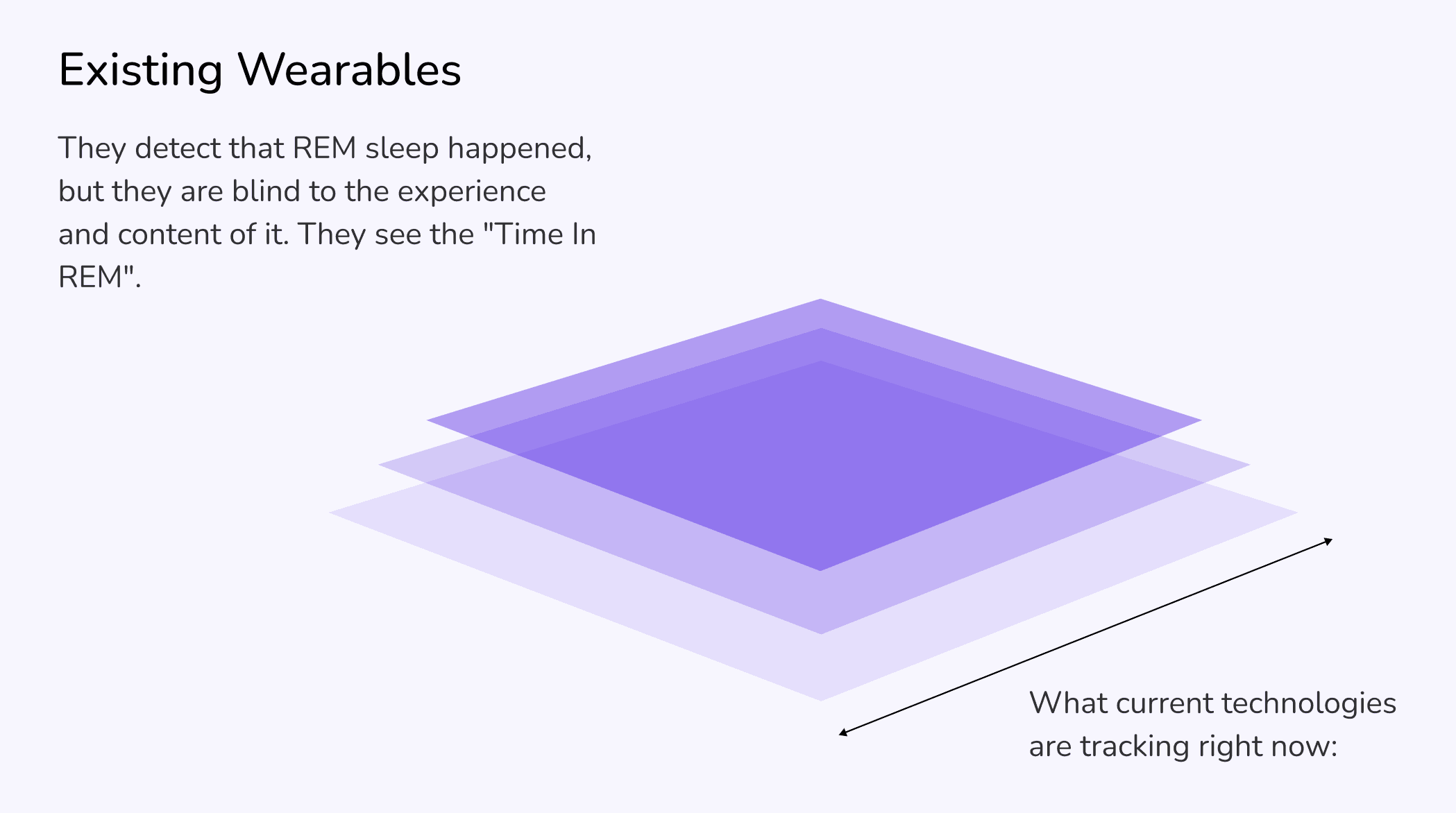
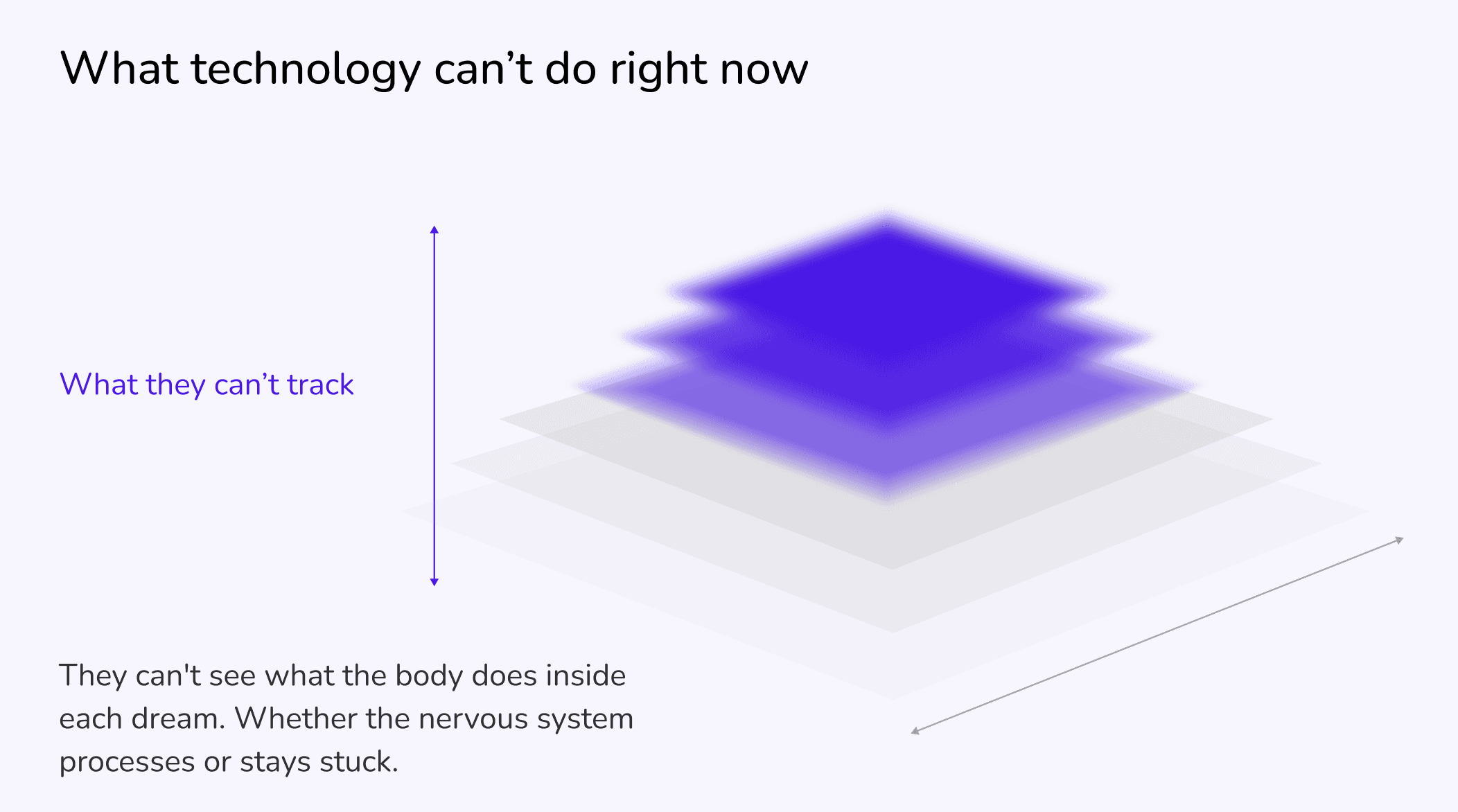
Current wearables know when REM Sleep happens. However, they can't see inside it whether your body was processing or bracing, whether a nightmare pattern has been recurring for weeks.
Solution
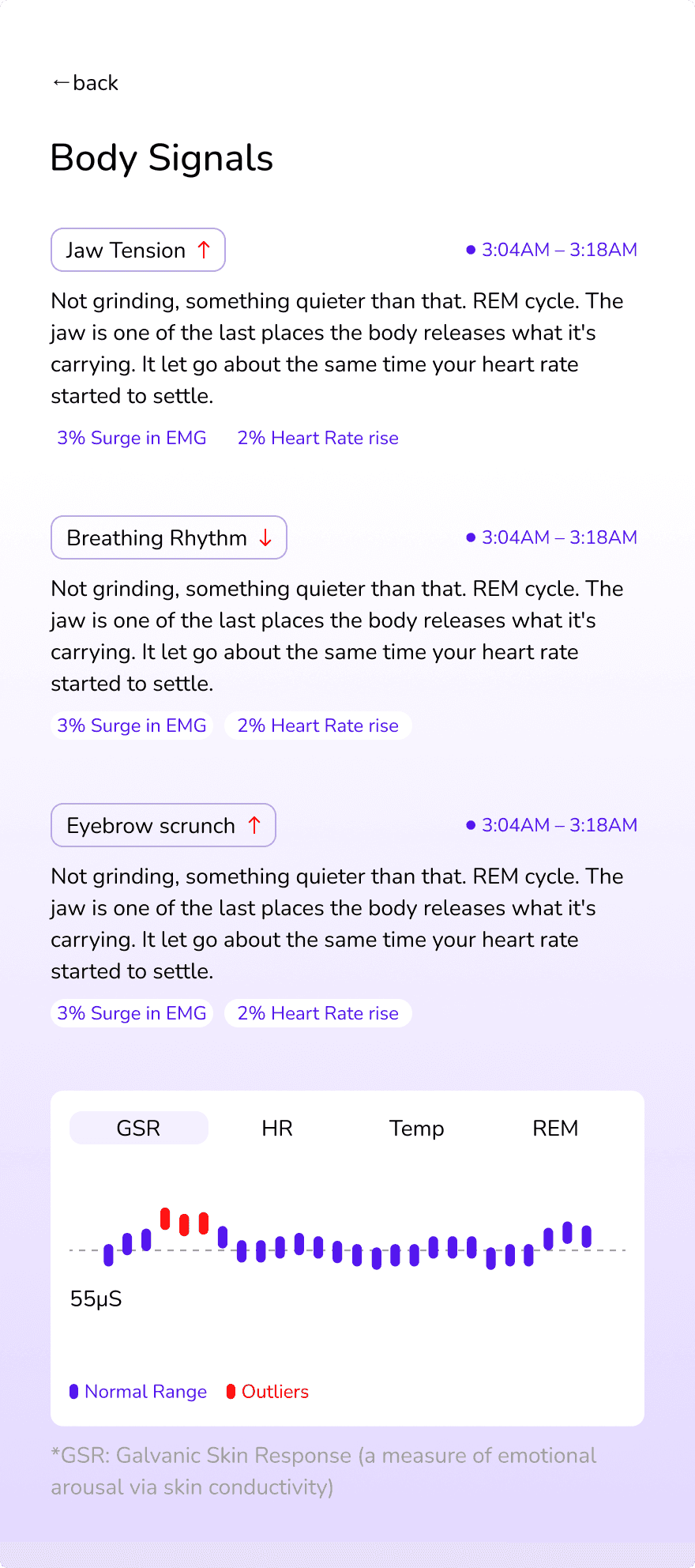
A hardware and software system that monitors physiological signals during REM Sleep and translates them into a plain-language morning report, real-time interventions, and long-term pattern detection.
02 Context & Research
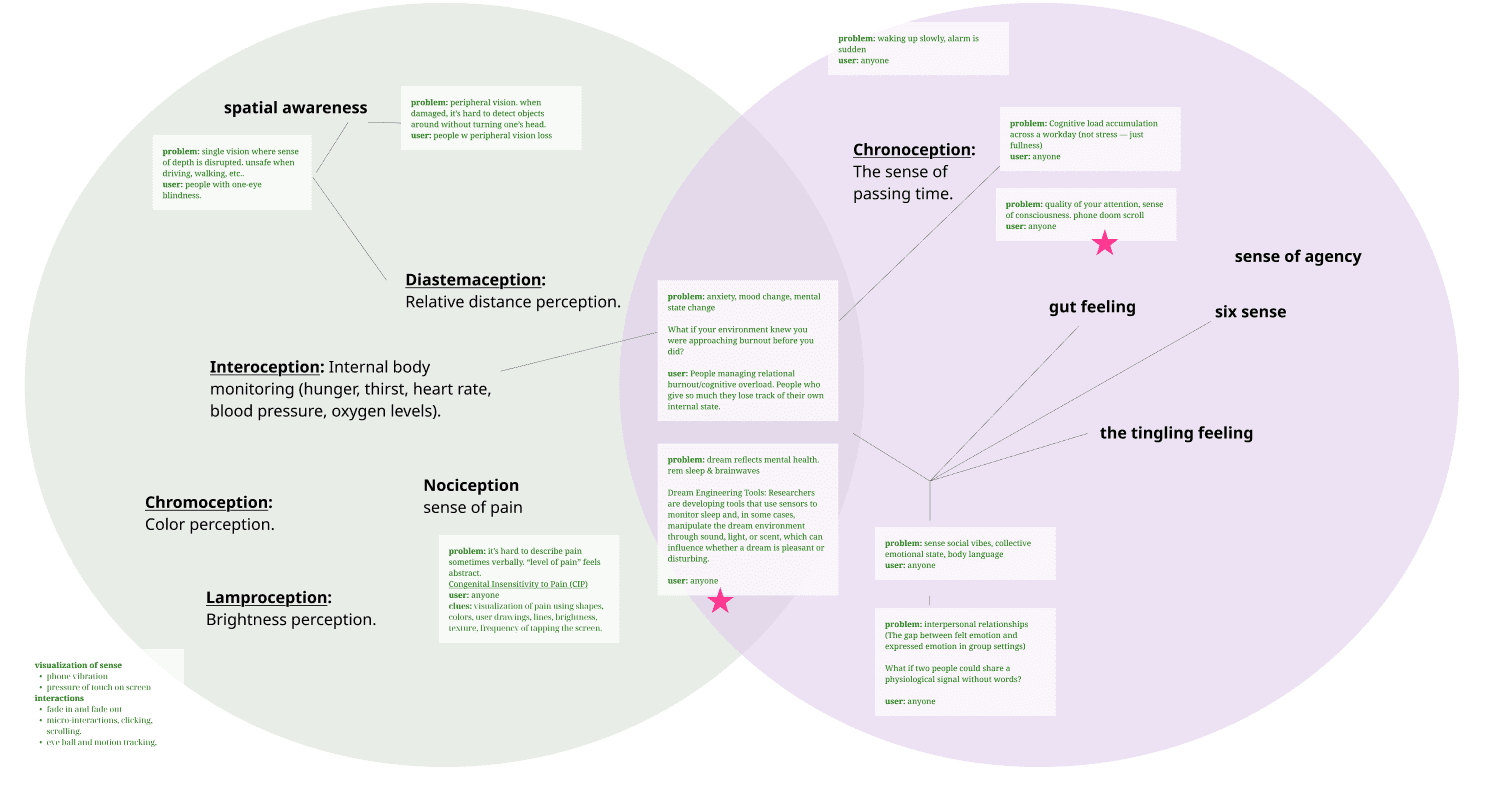
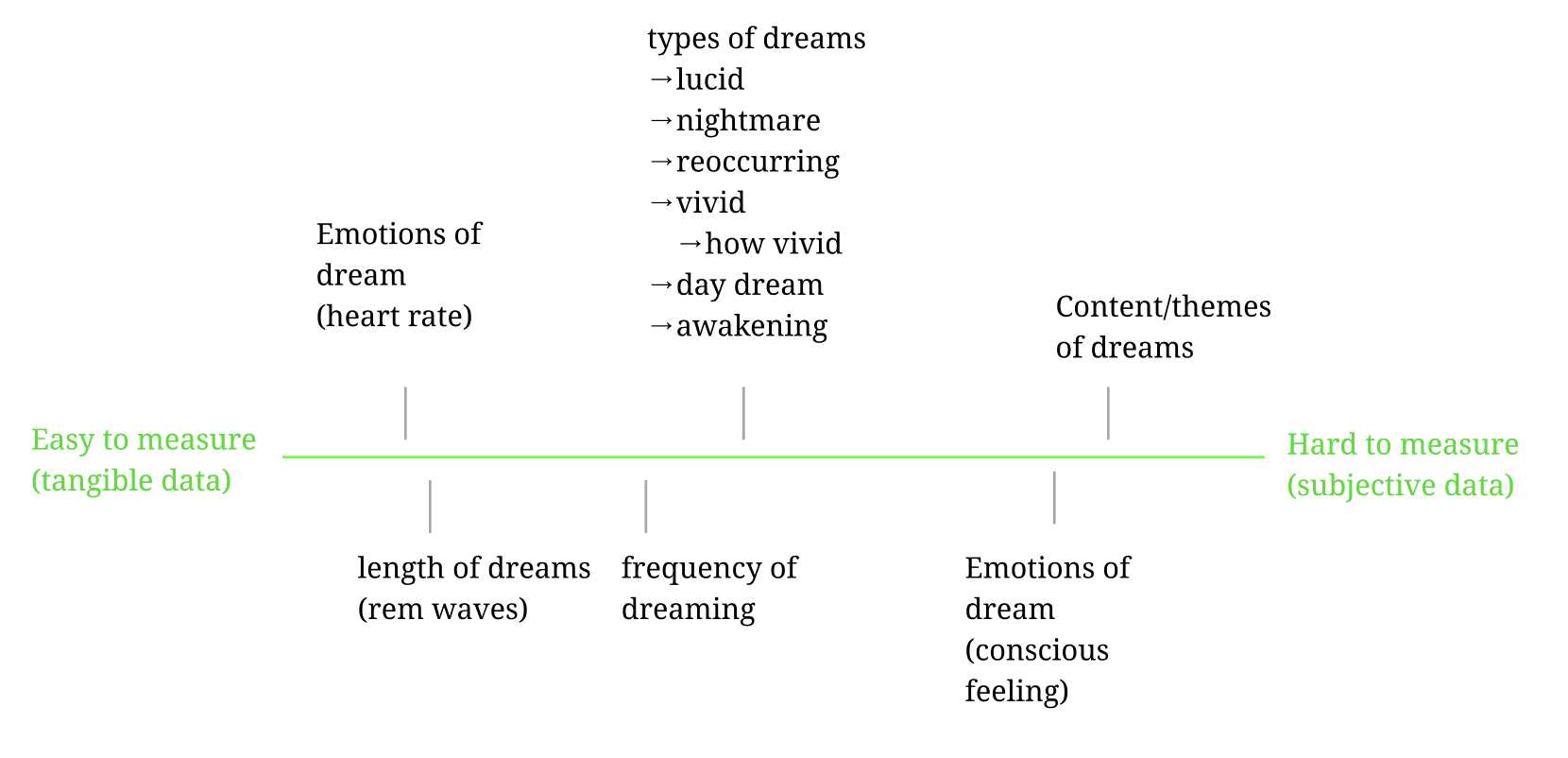
Initially, we framed our product concept to analyzing dream as data to provide insights on user's mental well-being.
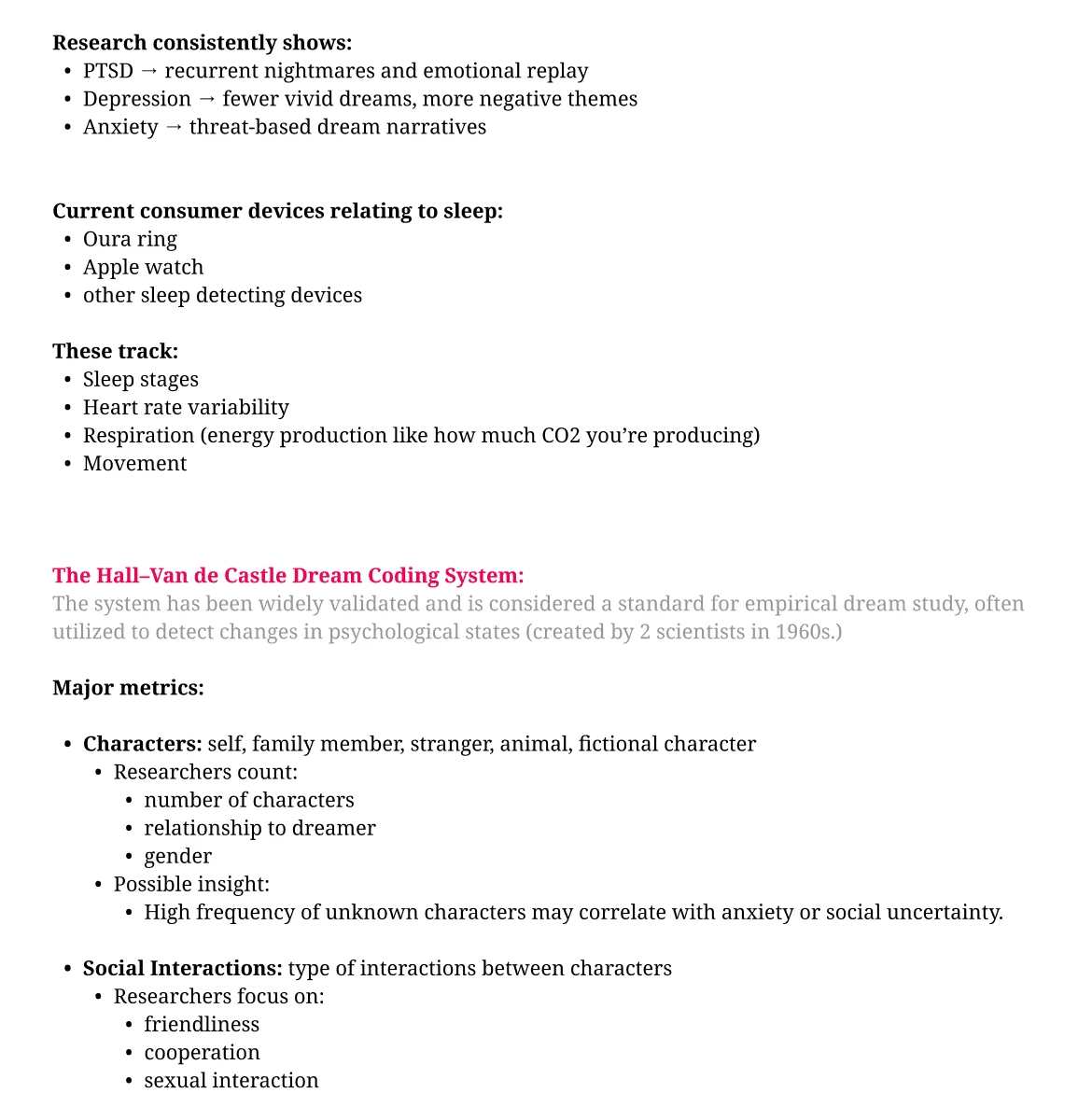
By leveraging the LLMs, we gathered previous scientific research on Dream Coding.
Identified an industry gap through competitive audit
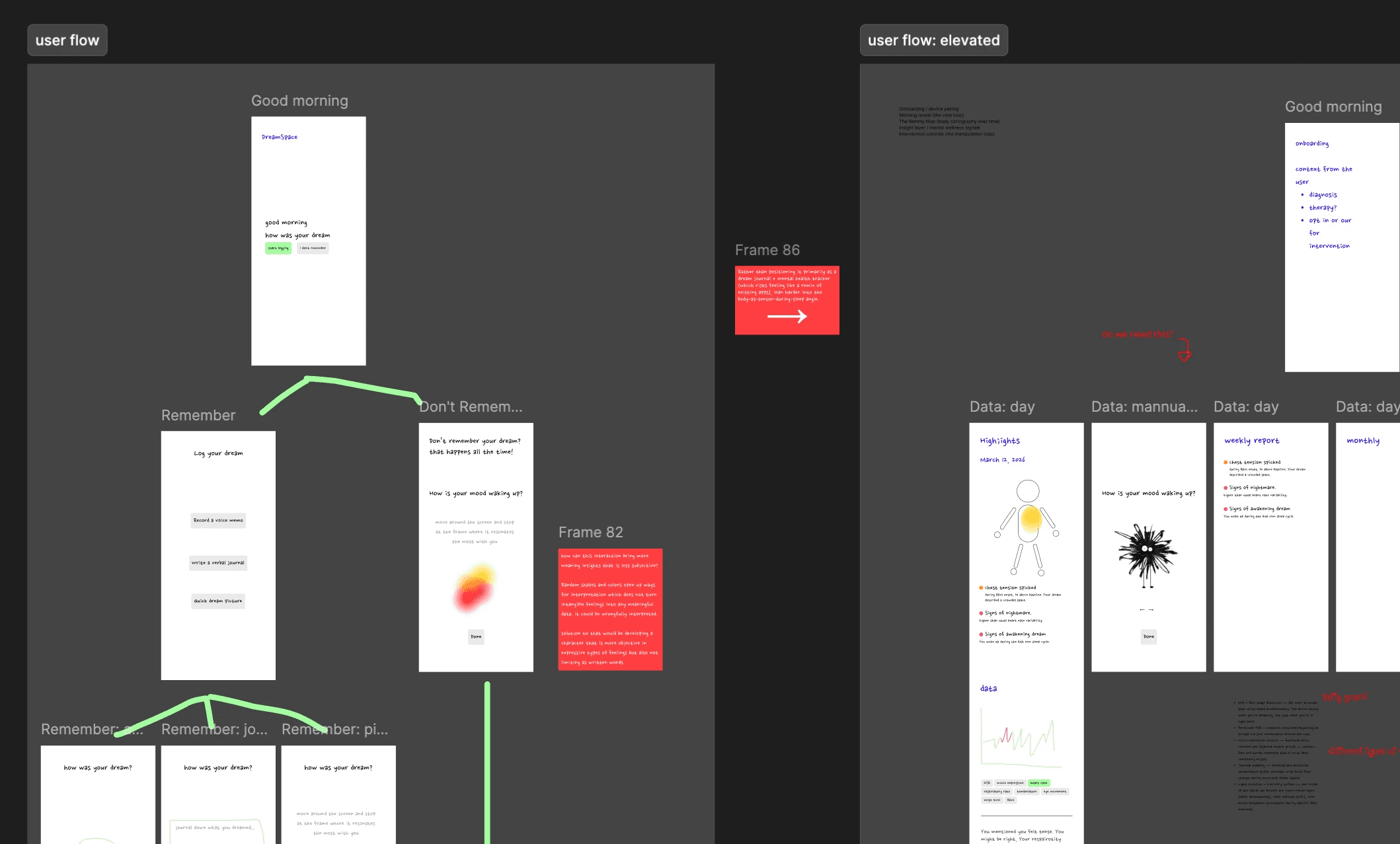
03 user flow
After identifying our user needs, we explored several user flow variations, prioritizing the data sync between hardware and software apps.
The following user groups would benefit the most from our product.
People managing anxiety, PTSD, or depression where REM quality is clinically significant
People in therapy who want physiological data to bring to sessions, not just self-report
Anyone paying deliberate attention to their emotional and internal world
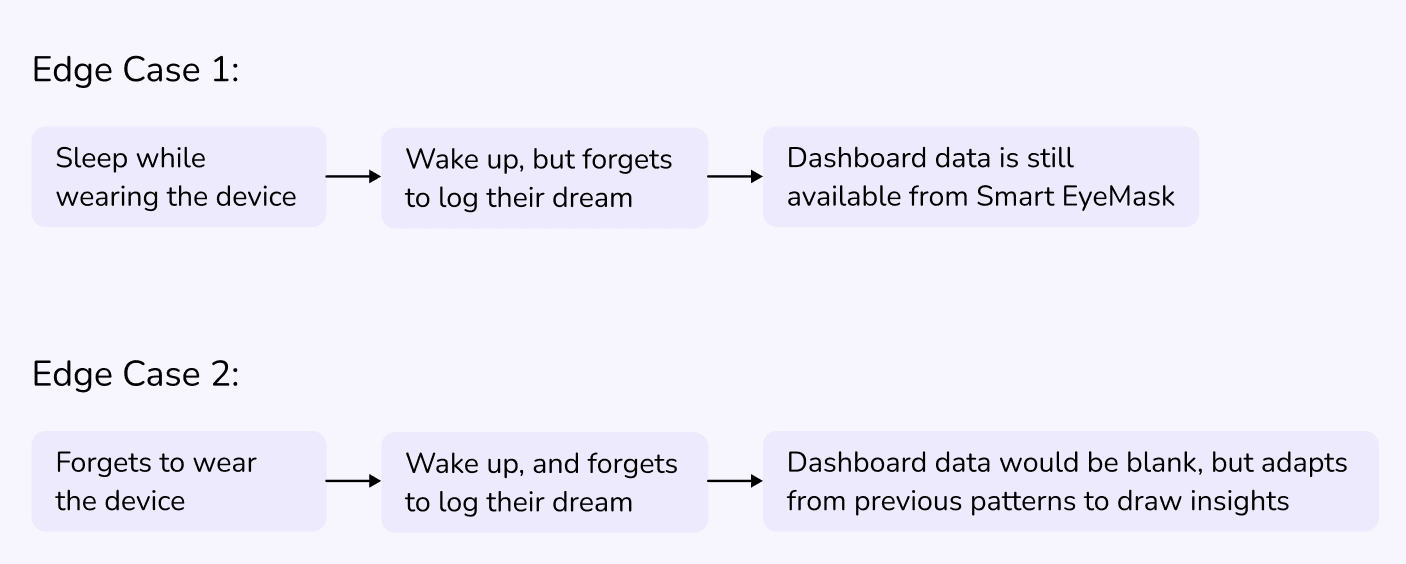
04 design redirection
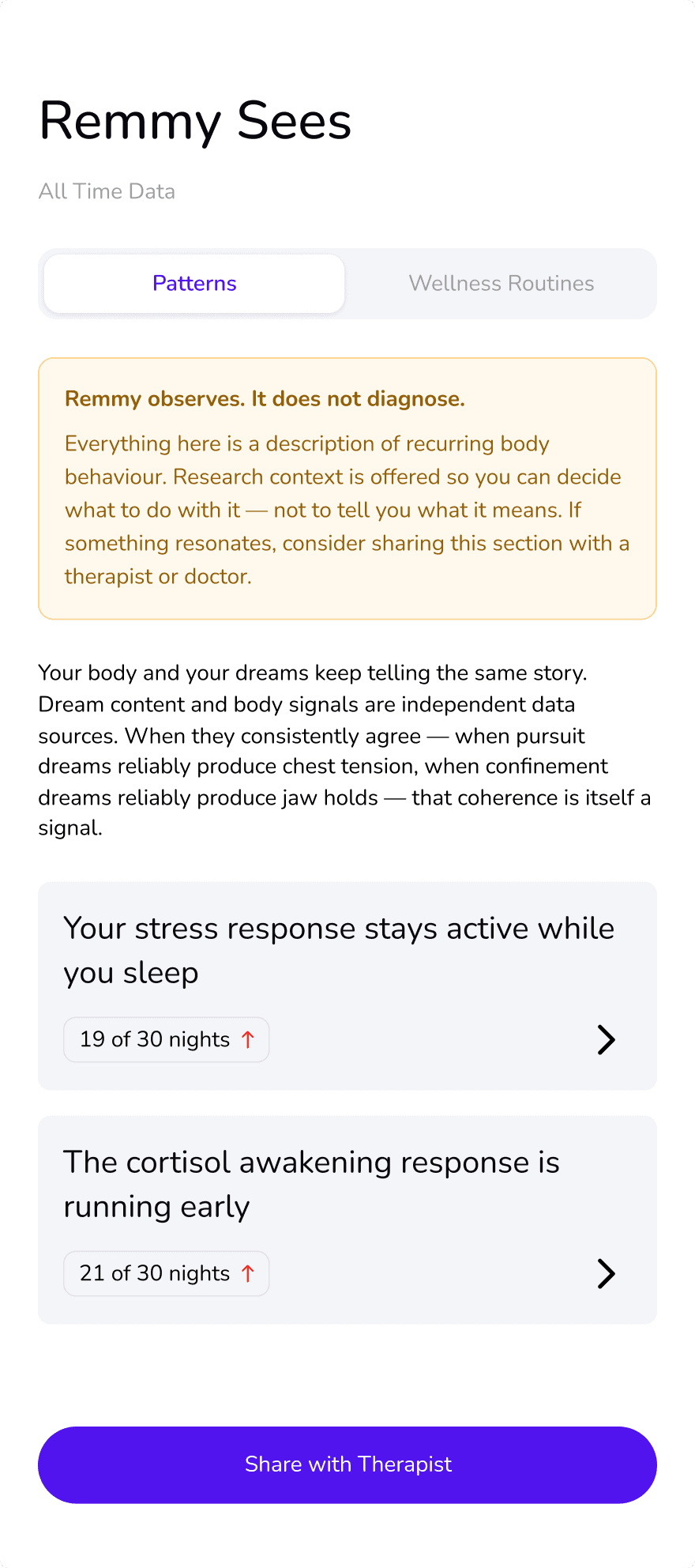
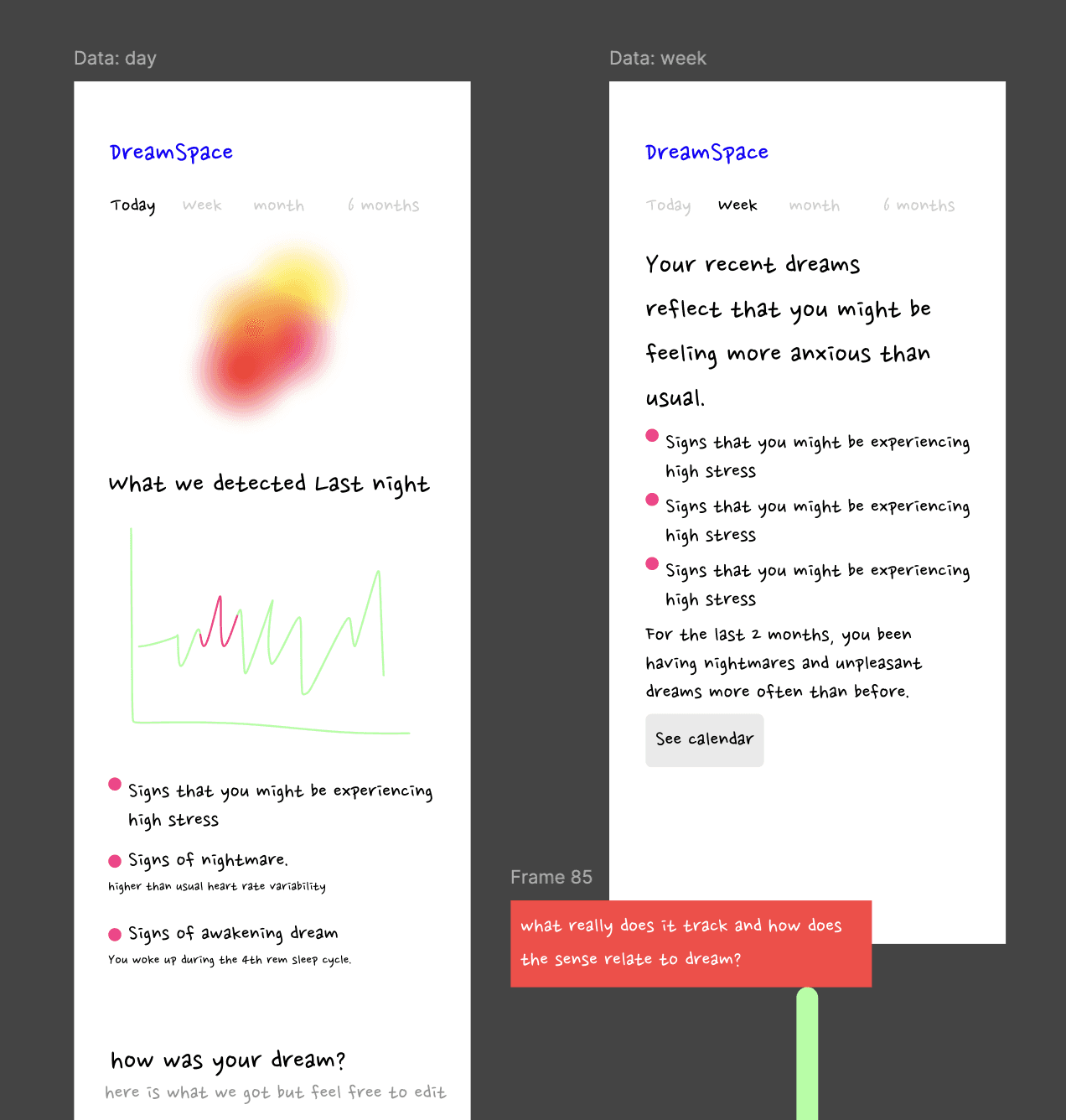
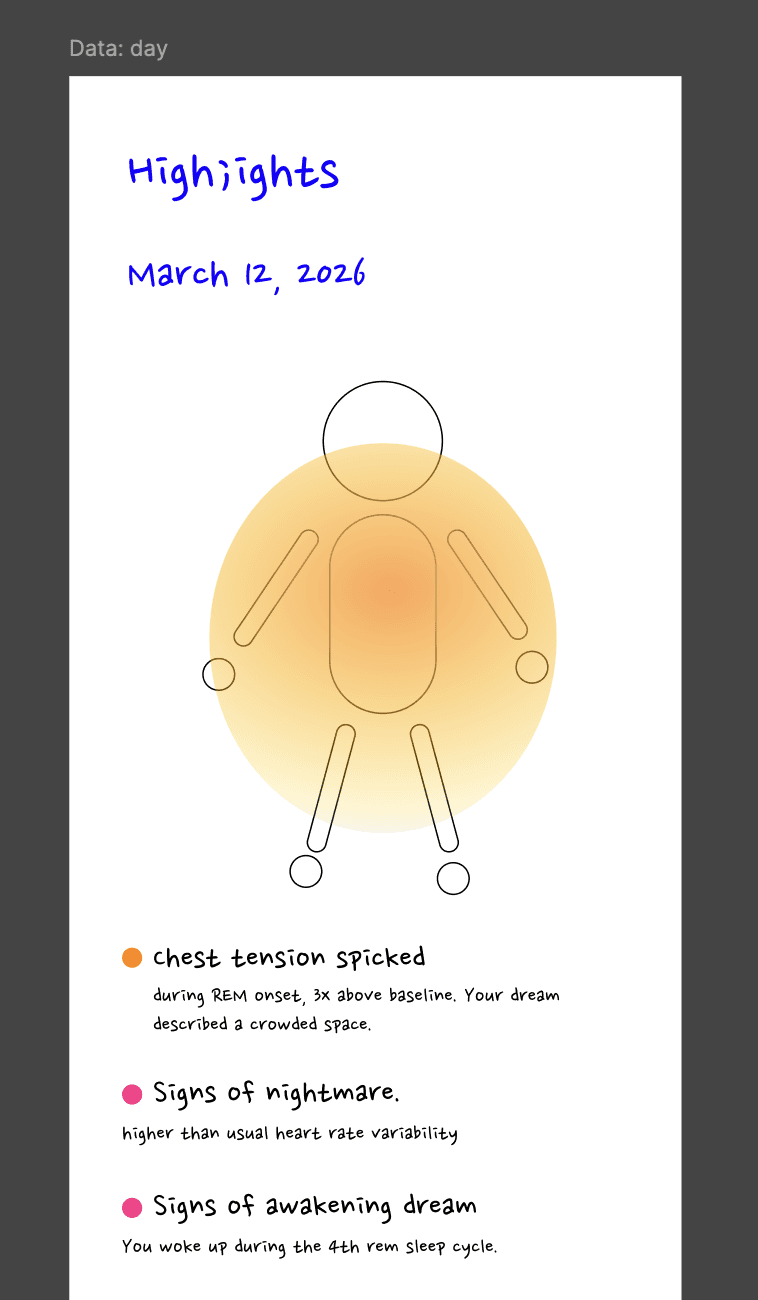
After few design iterations, we reframed the product to focus on detecting and observing the body reactions in respect to user's own interpretation of their dream.
05 final decisions
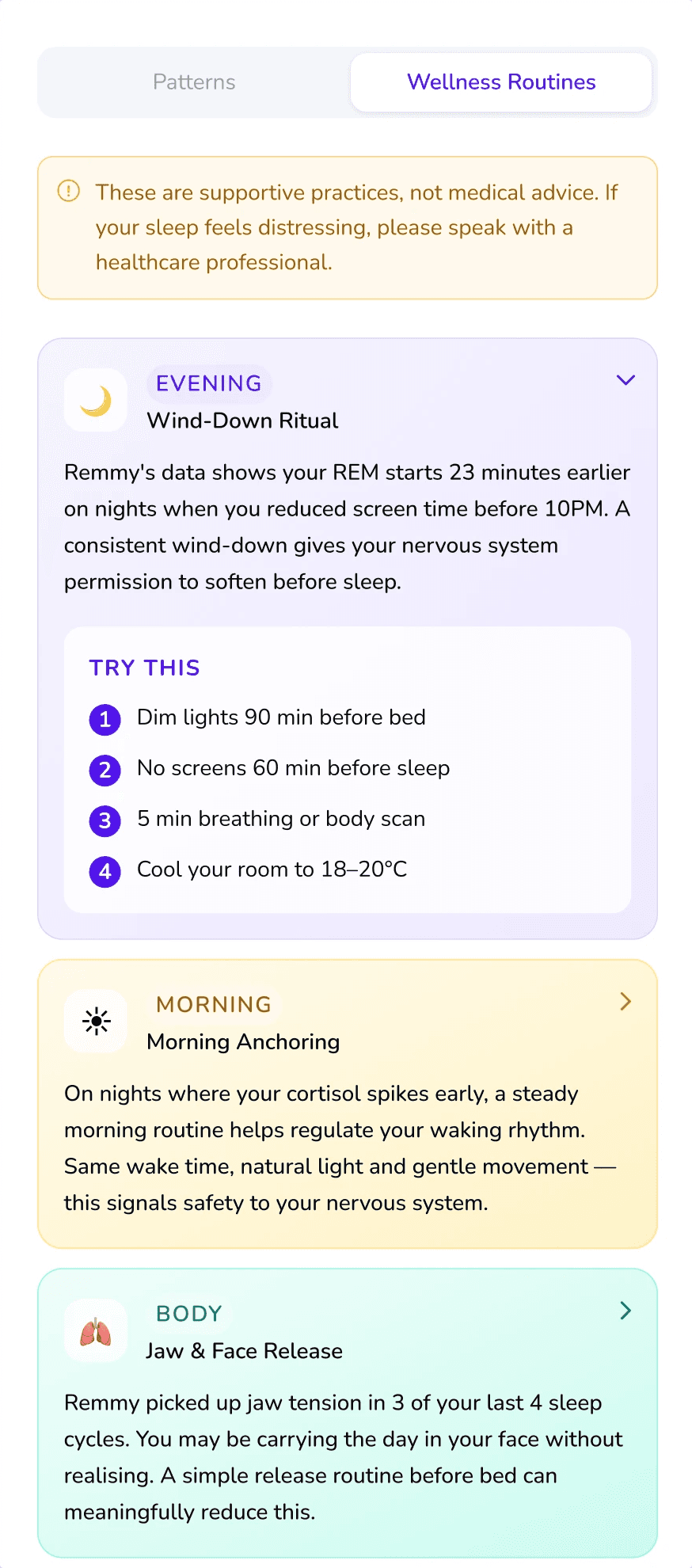
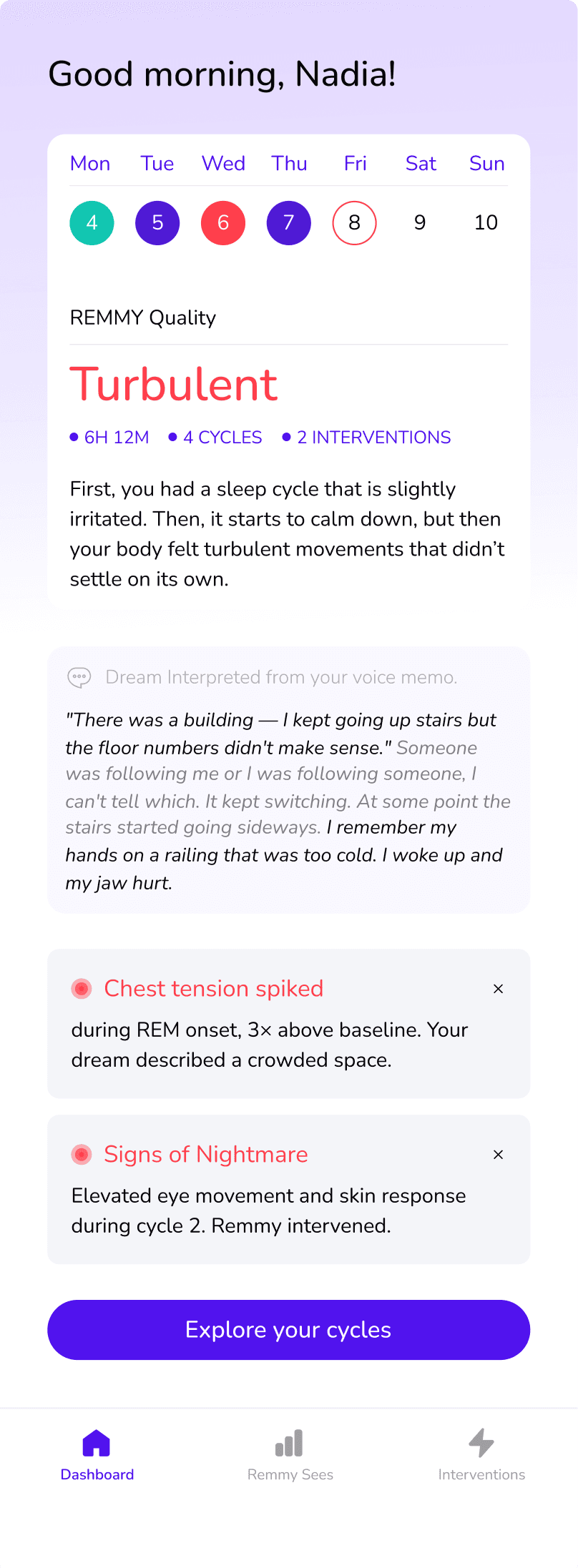
Since dream is an intangible data, we have designed visualizations that speak the quality of it.
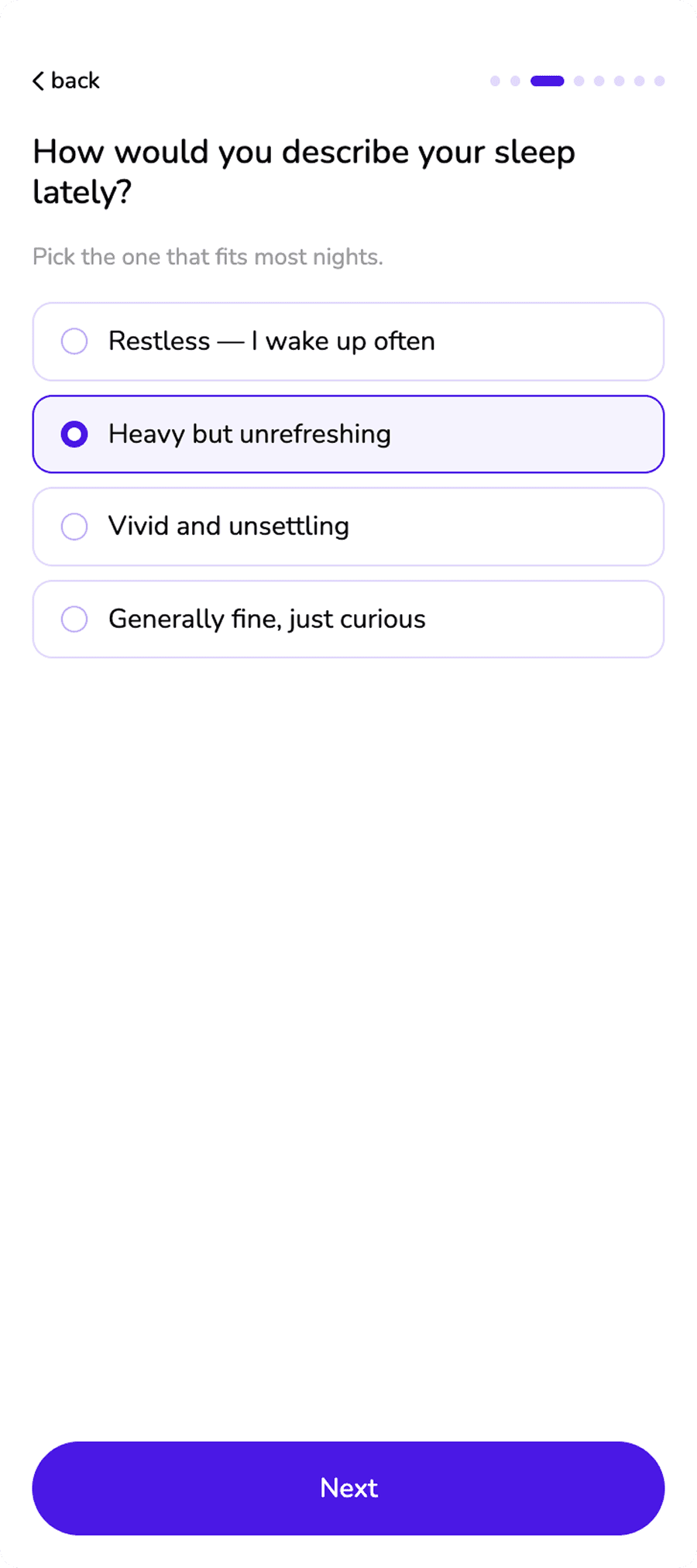
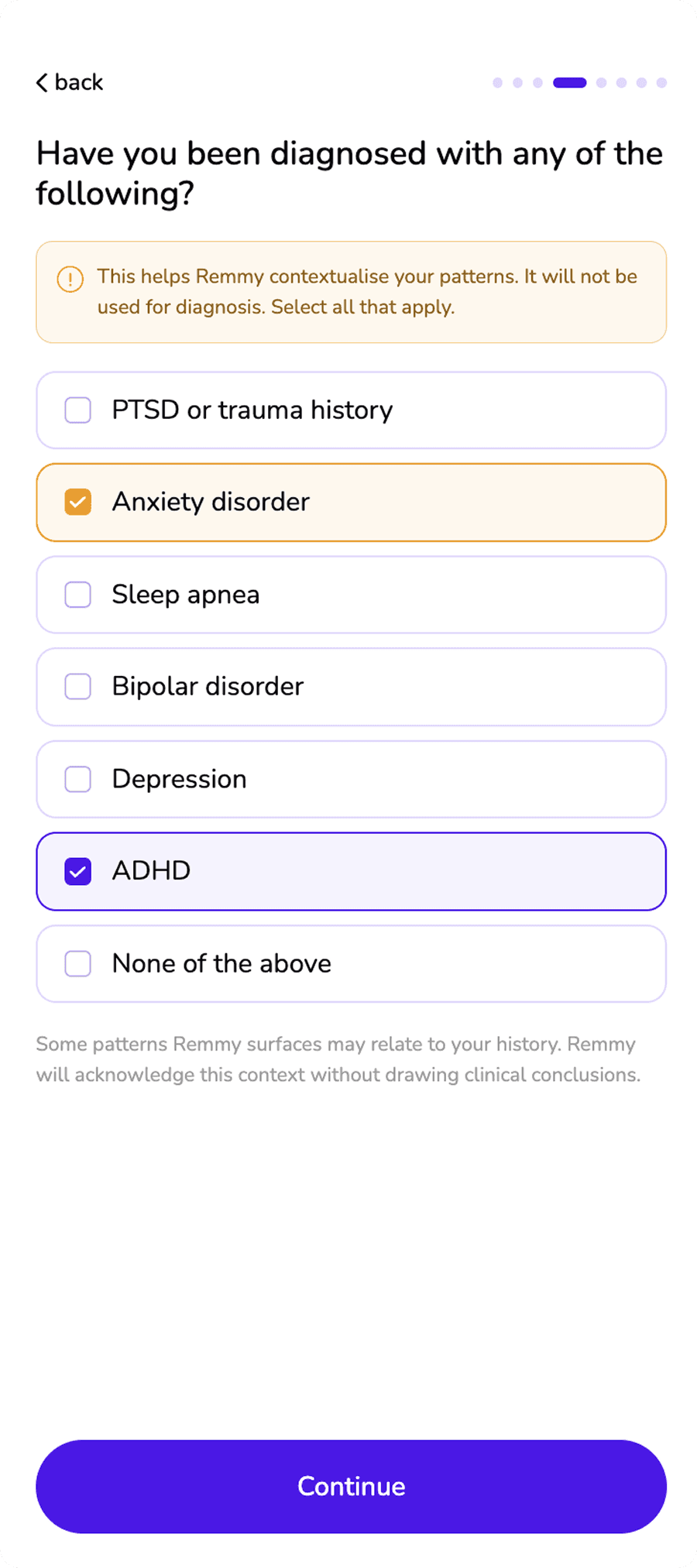
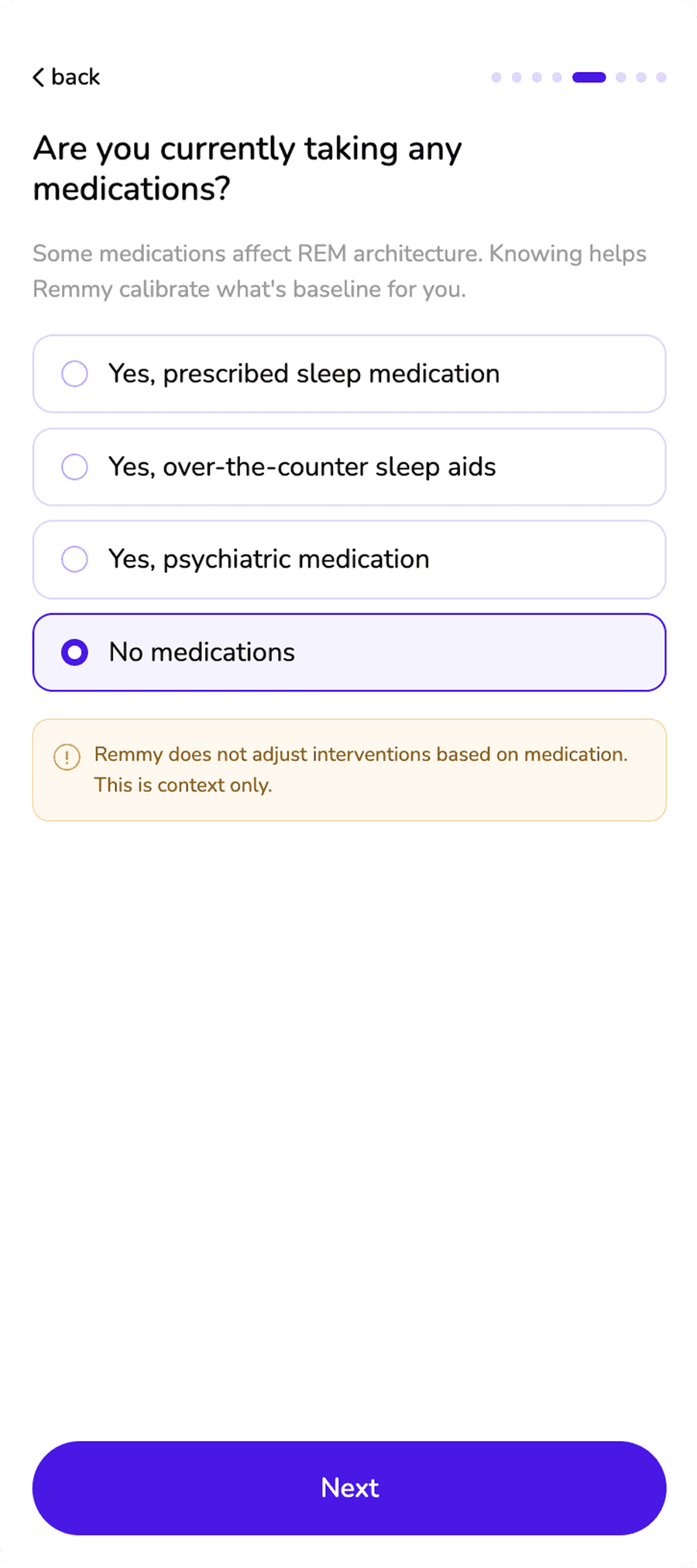
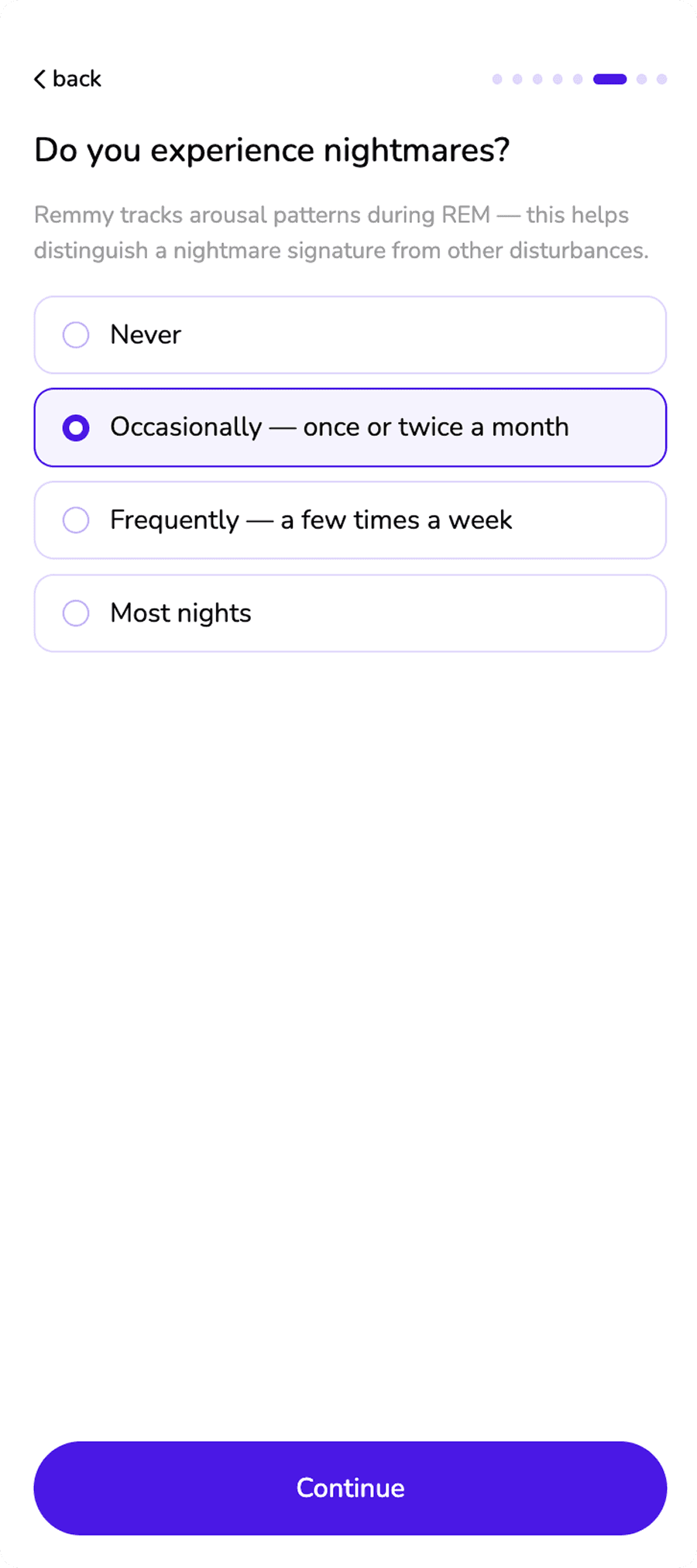
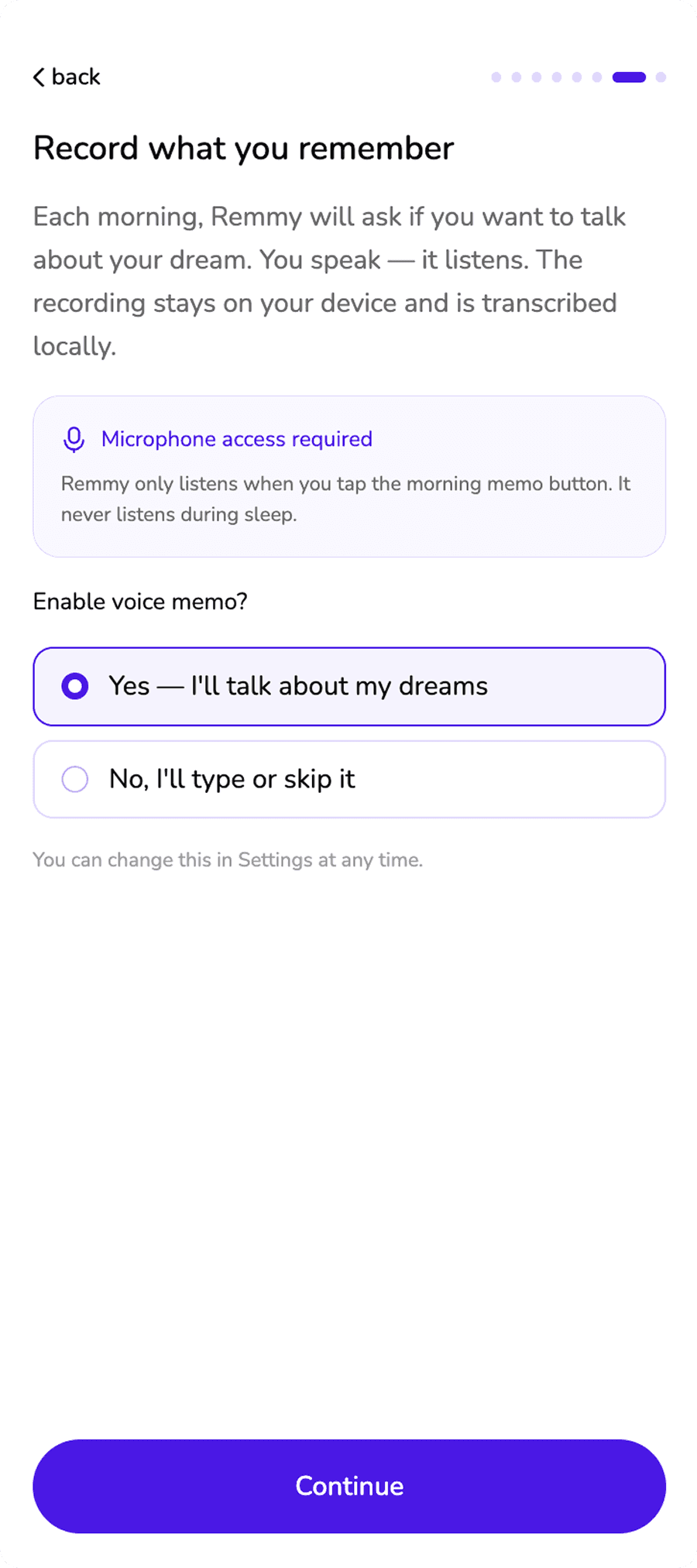
Assessing prior mental diagnosis
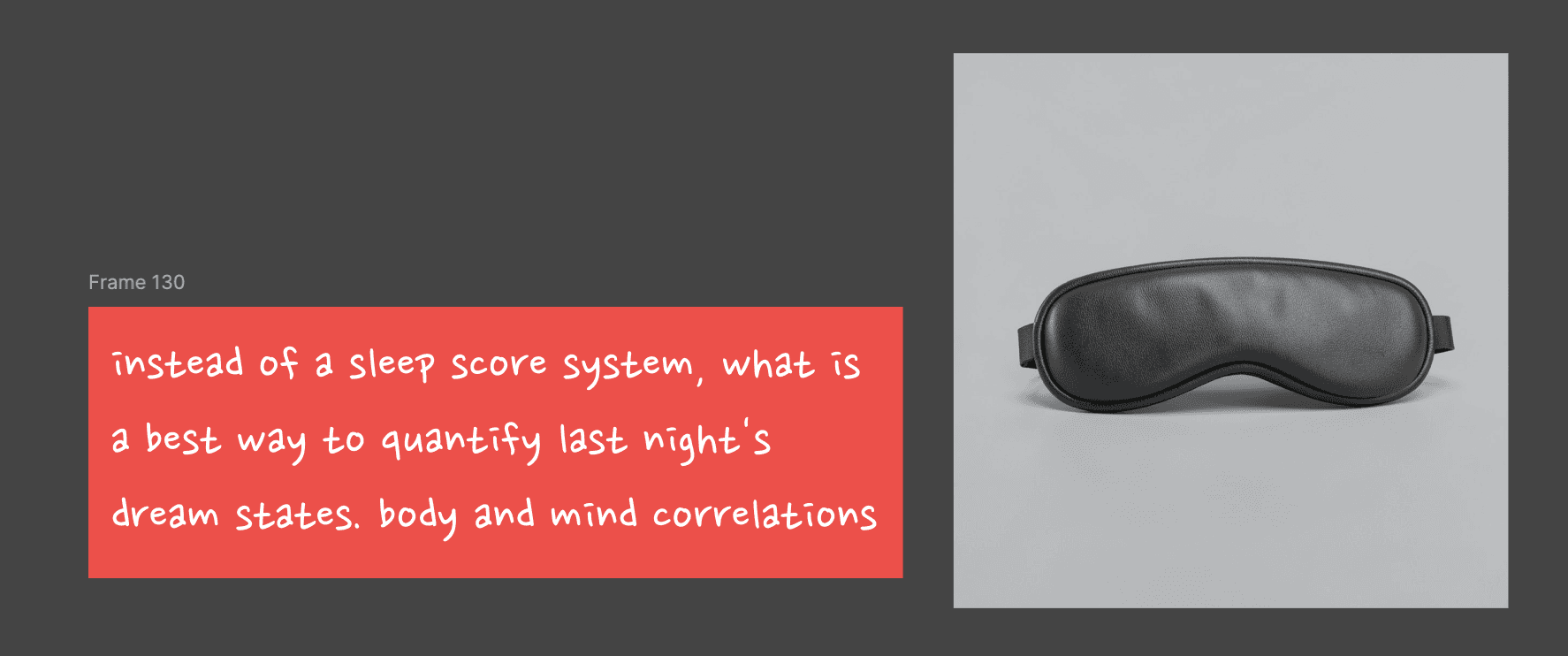
Dashboard with no-score system
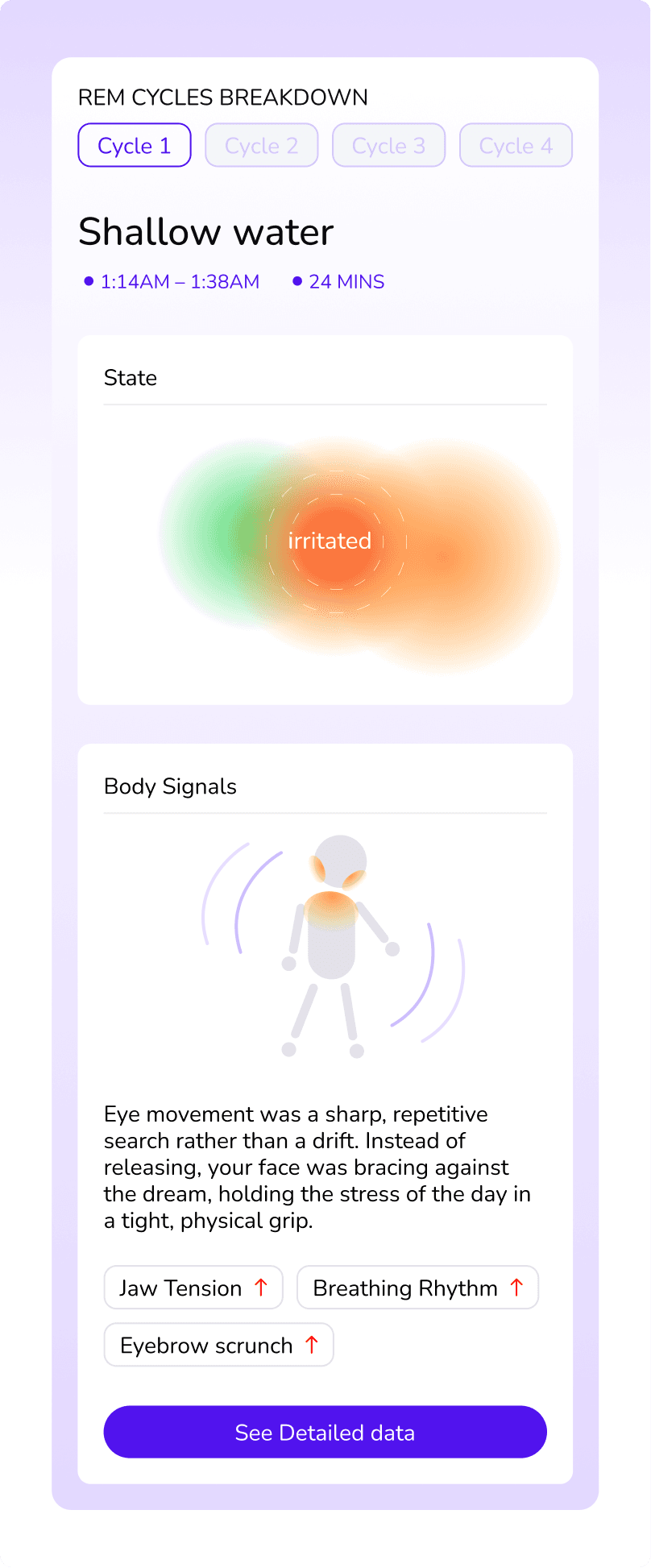
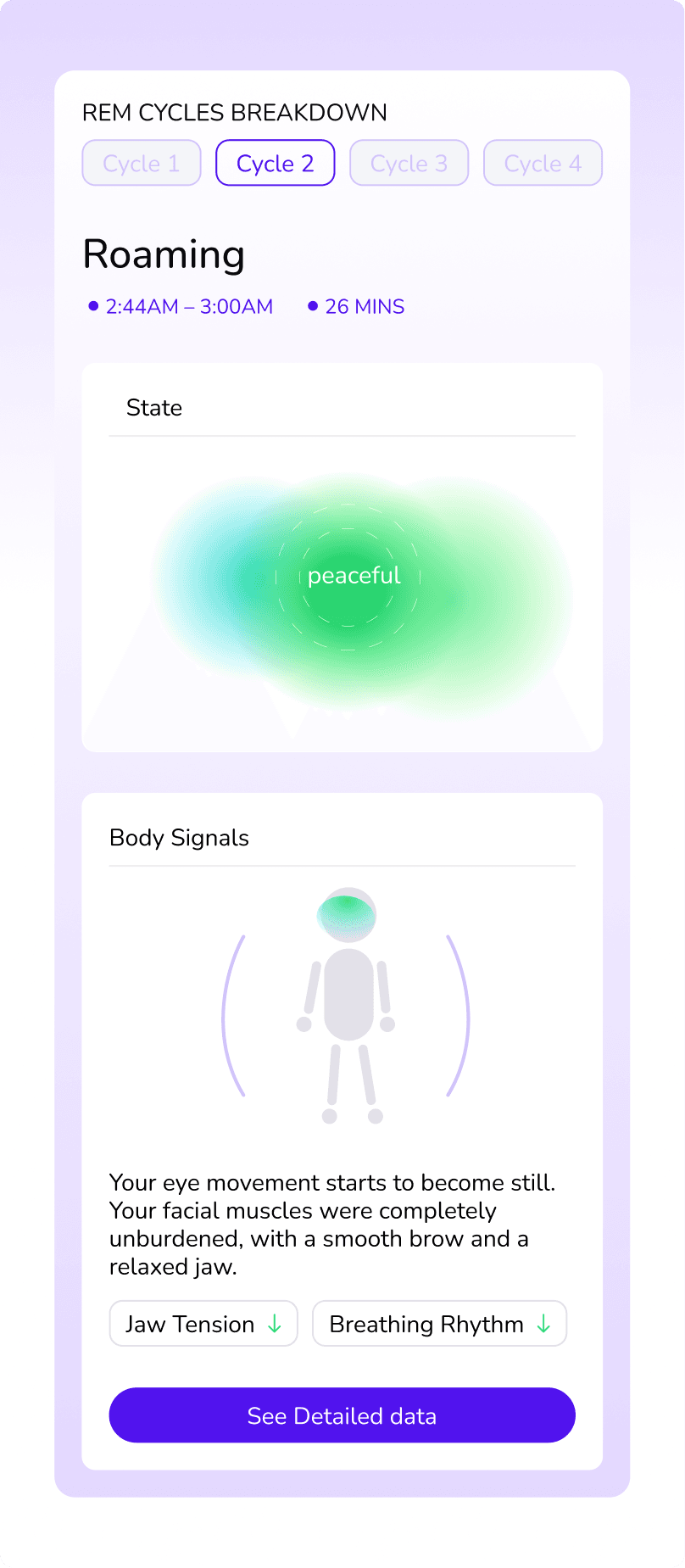
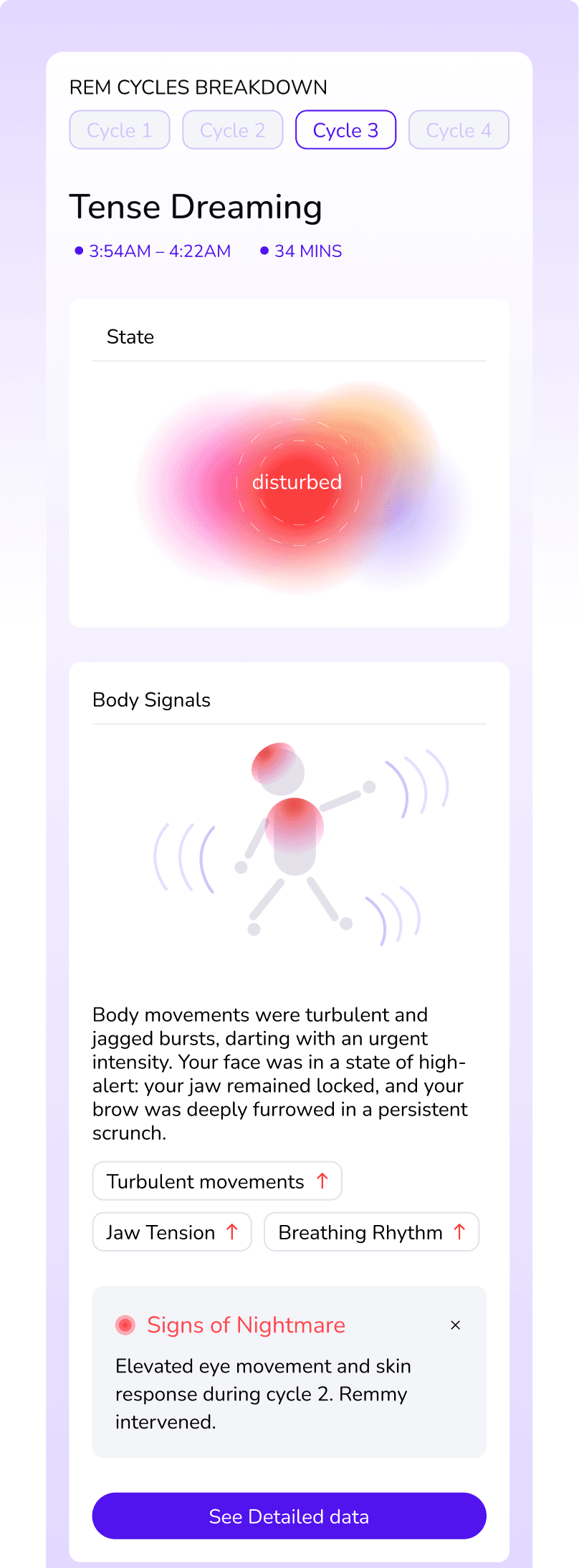
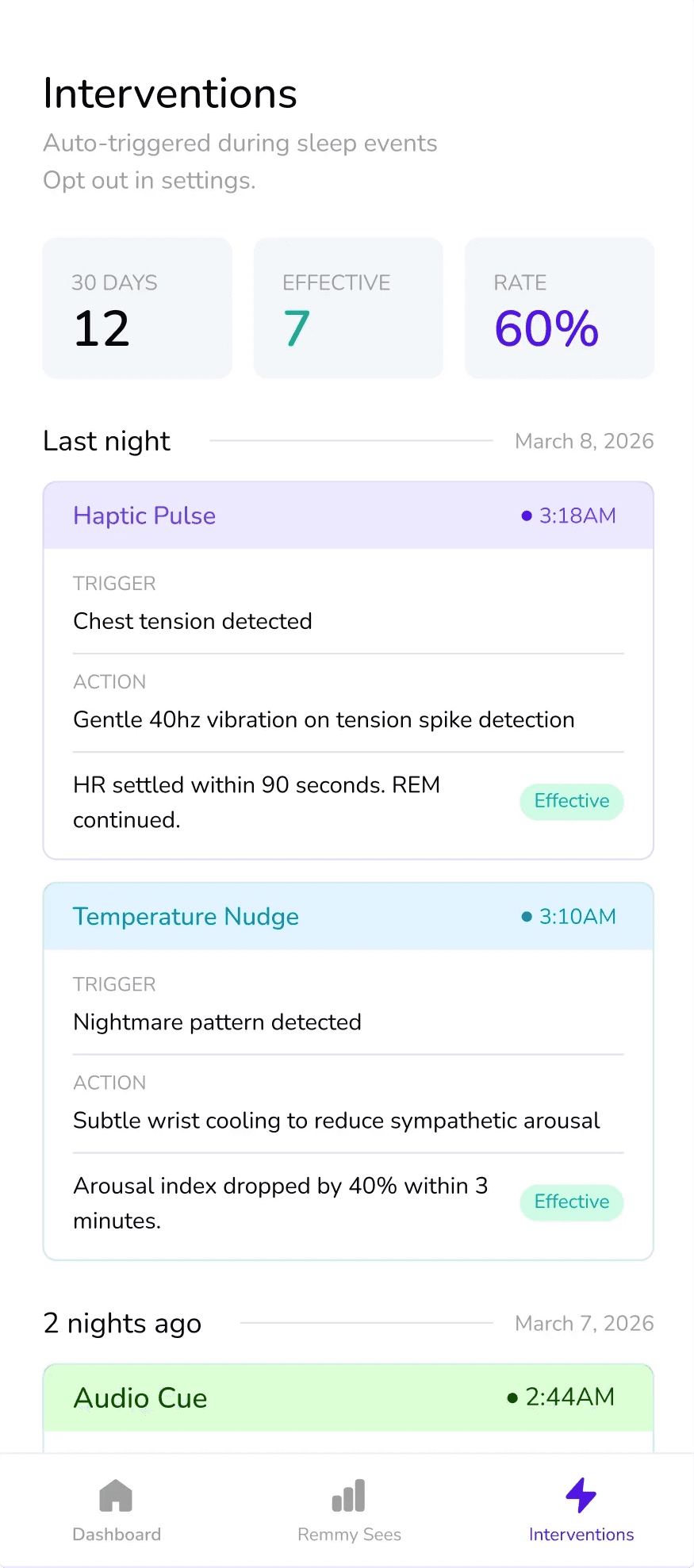
Relax Interventions by EyeMask (wearable hardware) + Observation Insights by Mobile App (software)