Mighty Health: Mitigating loneliness in adults 65+ through social features
Role:
Product Designer
Timeline:
Sep 2020 - Apr 2021
Industry/Org:
Healthcare (YC startup)
Scope of Work
UX Research, Design System, Prototyping & Usability Testing
01 project overview
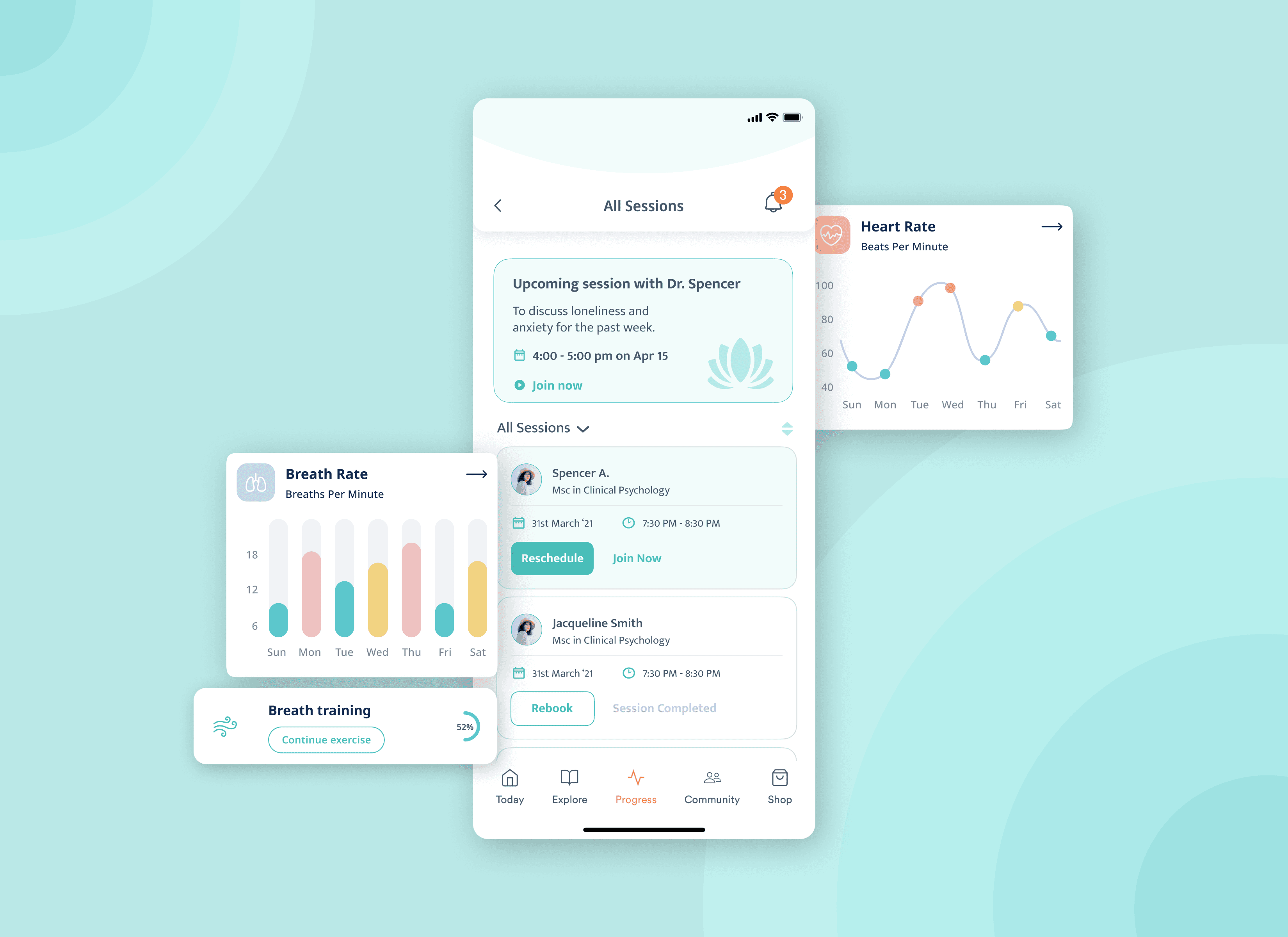
Noticed a mental well-being struggle for older adults and drove it into a feature proposal into an existing app by collaborating with founders and PM.
Problem Root Cause
As people get older, they face loneliness and hardship of low digital literacy rate placing them into a negative loop. Adults aged over 65+ often live alone, and seek for ways to connect and belong in a community.
Solution
Designed a Mental Well-being section: mood tracking, social goal setting, breathing exercises, and a friendly community chat - increased user engagement by 8%.
02 problem framing
After interacting with current app features, we moved on to a feature proposal where older adults feel connected, not just healthy.
To understand what "loneliness" actually meant for users,
Our team started talking to current users, and focused on what struggles that they face every day relating to their mentall well-being before sketching a single screen.
03 Challenges & pain points
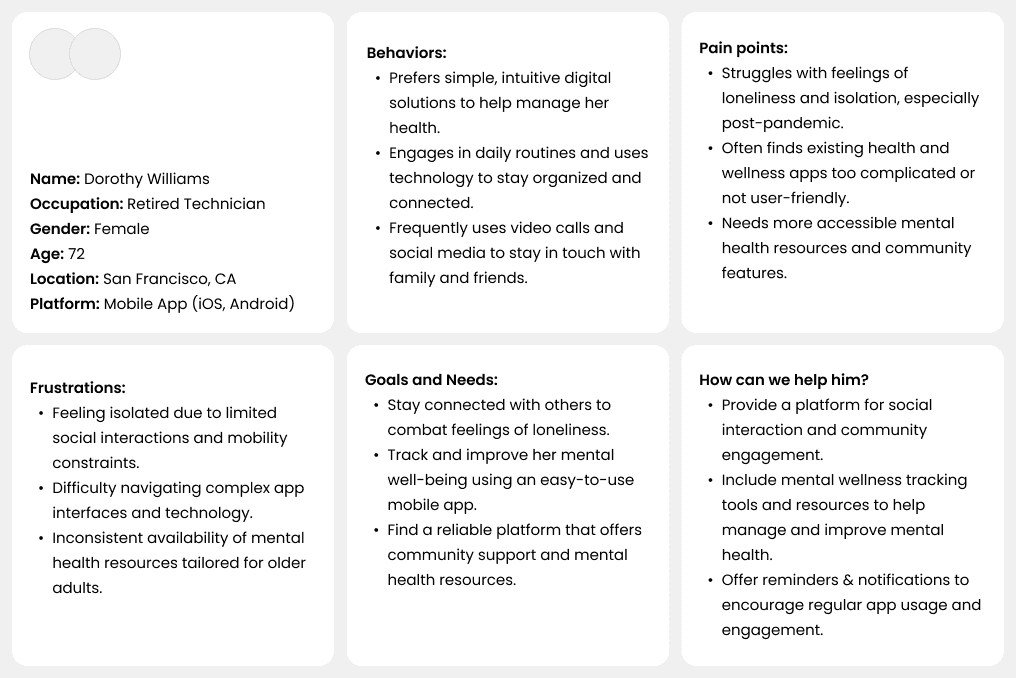
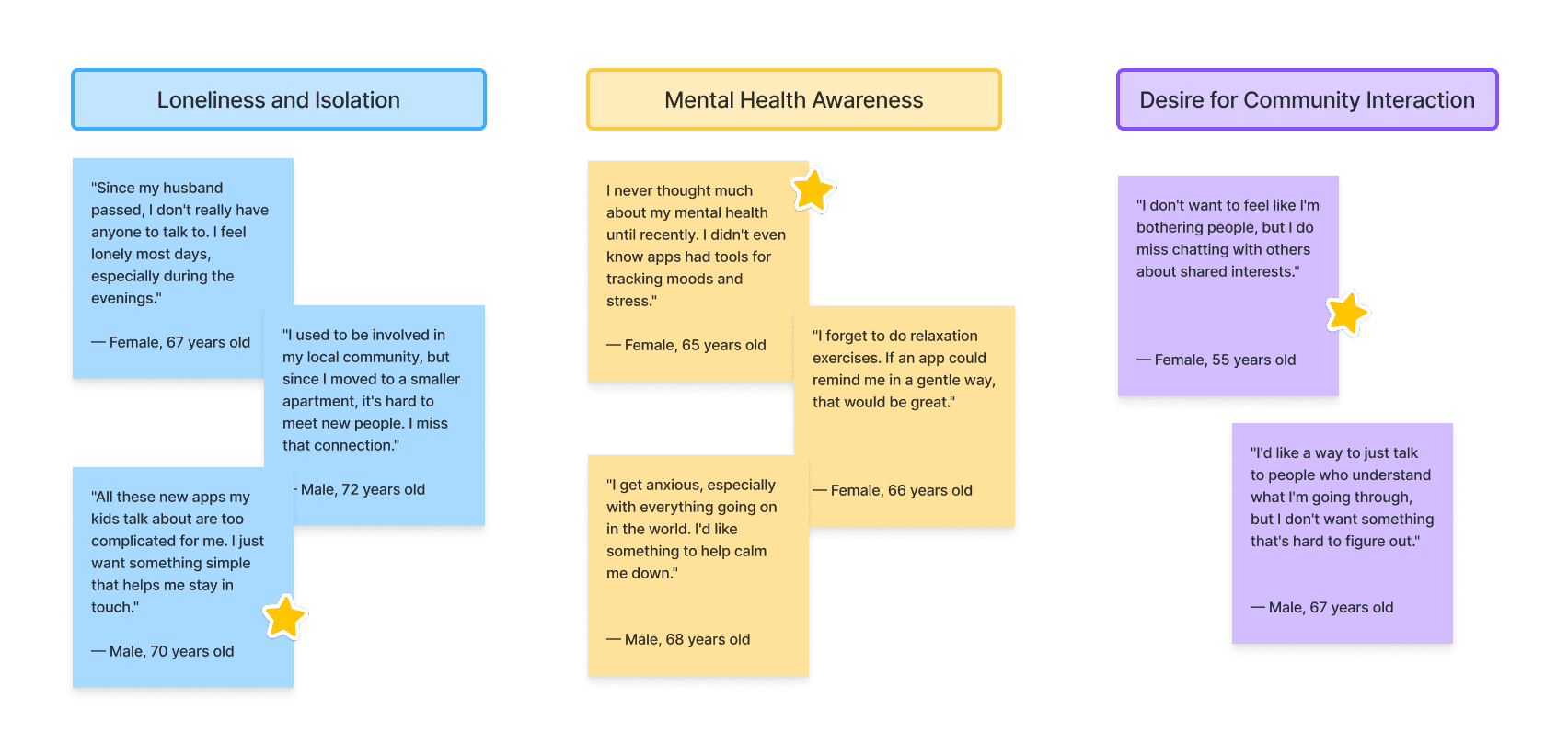
After 8 user interviews, and 2 rounds of task-completion testings, I found 2 things I didn't anticipate.
Users had no vocabulary for their emotions.
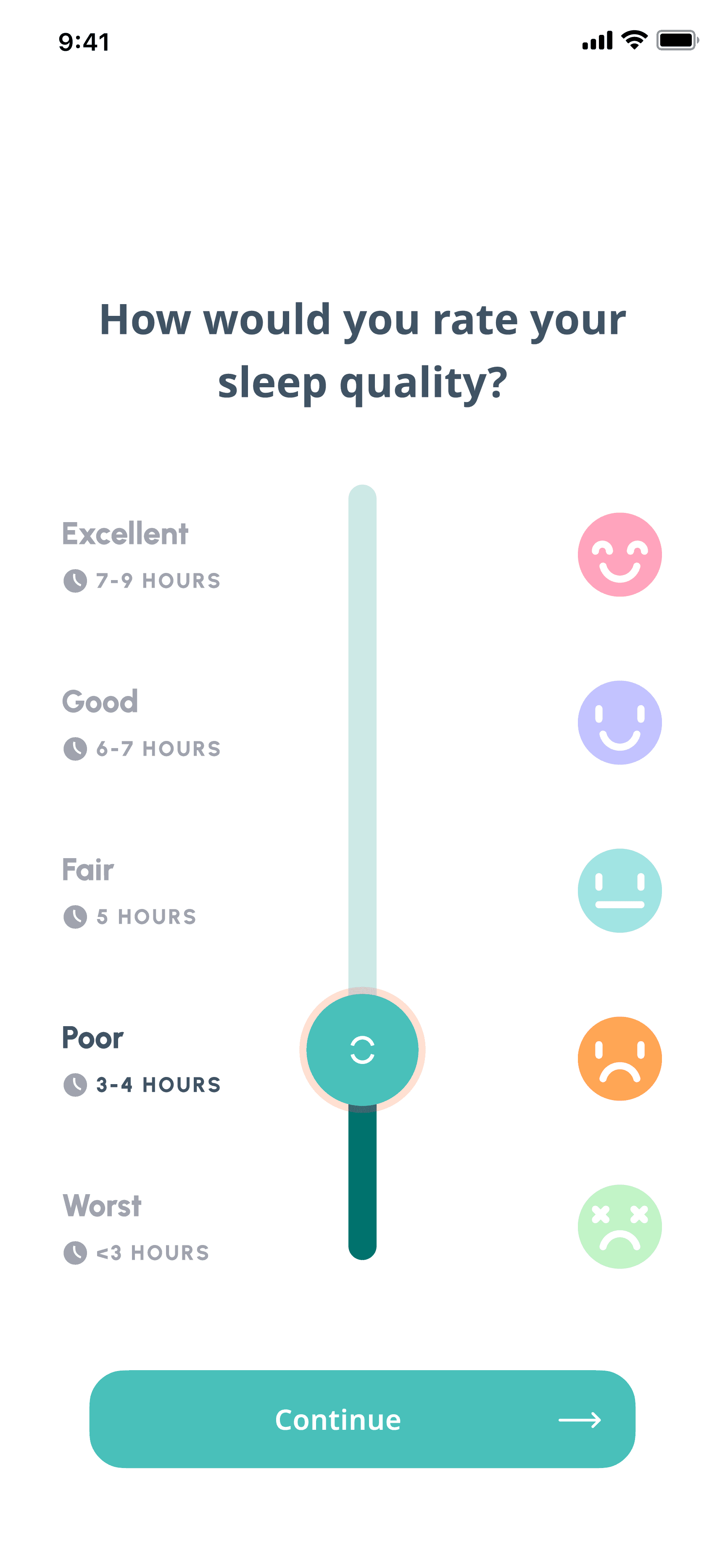
Most participants had never tracked mood digitally and many struggled to articulate how they felt beyond "fine" or "not great." Standard emoji scales caused confusion: "That face looks angry to me."
Empty community screens triggered anxiety.
When users landed in a blank chat, they froze. "Am I supposed to say something first? What if no one responds?" First-message rate in Round 1 was just 17%.
04 user flow & design system
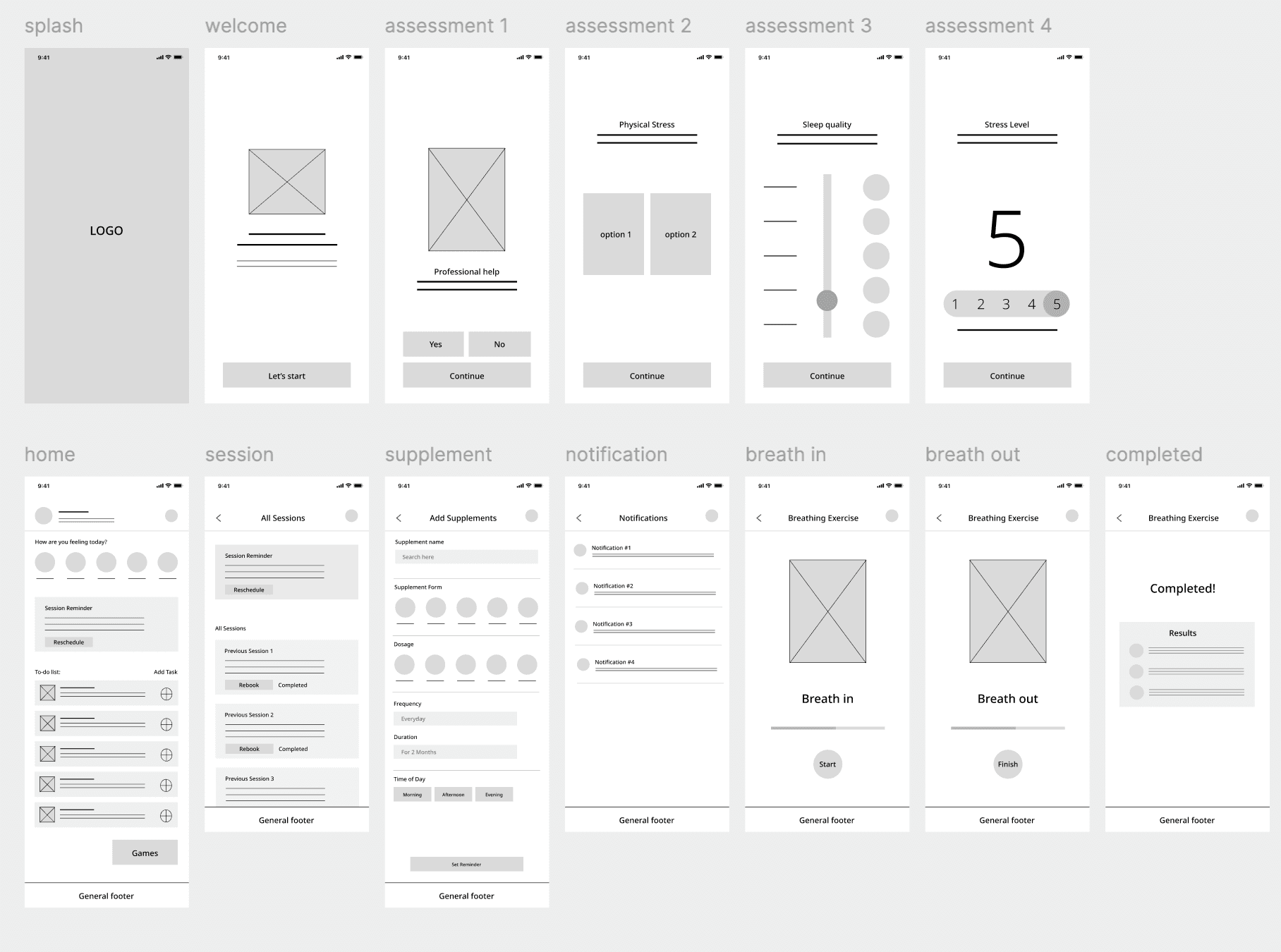
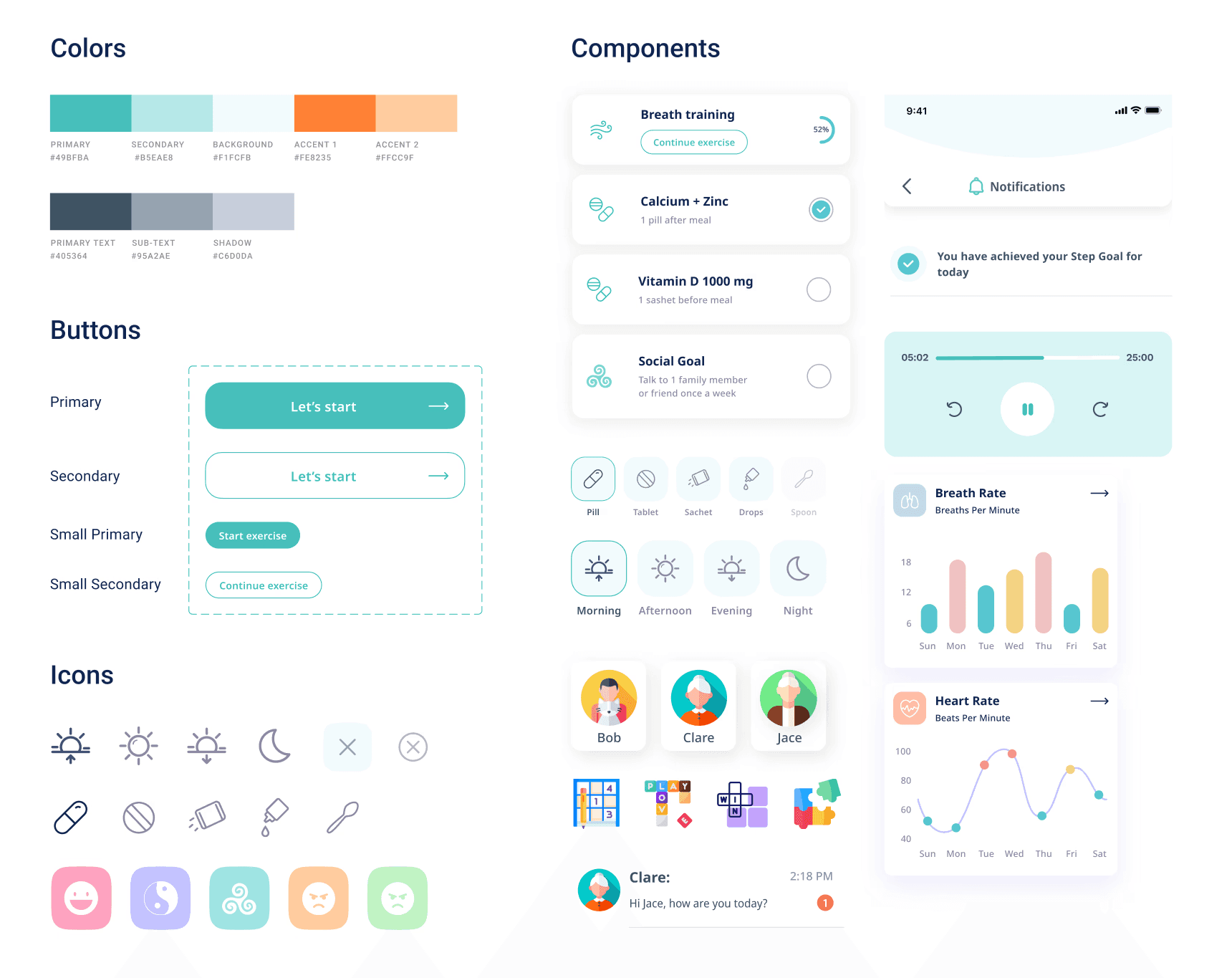
Based on interview insights, I improvised the direction into a distinct "Wellness" section within the app with its own visual language, navigation entry point, and onboarding.
By reducing cognitive load in data interpretation,
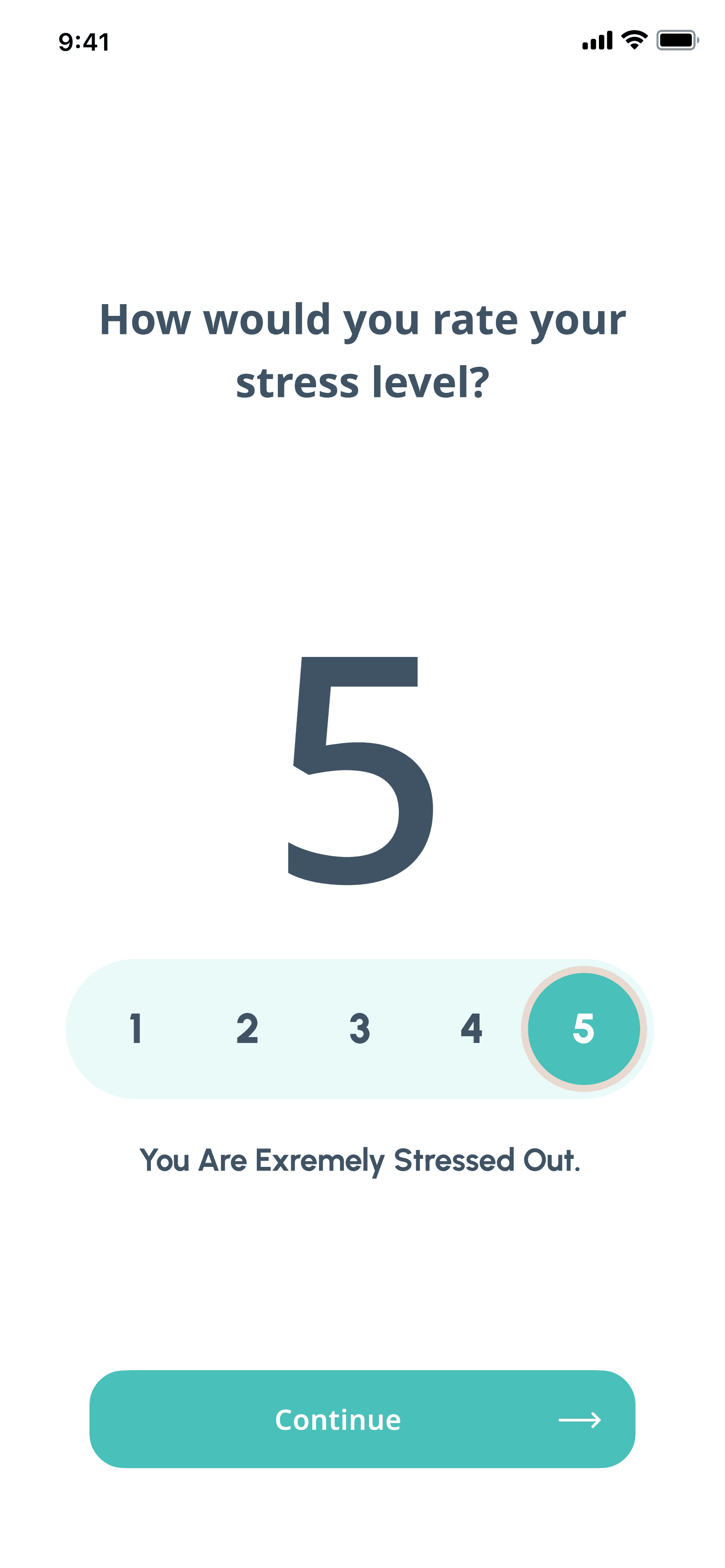
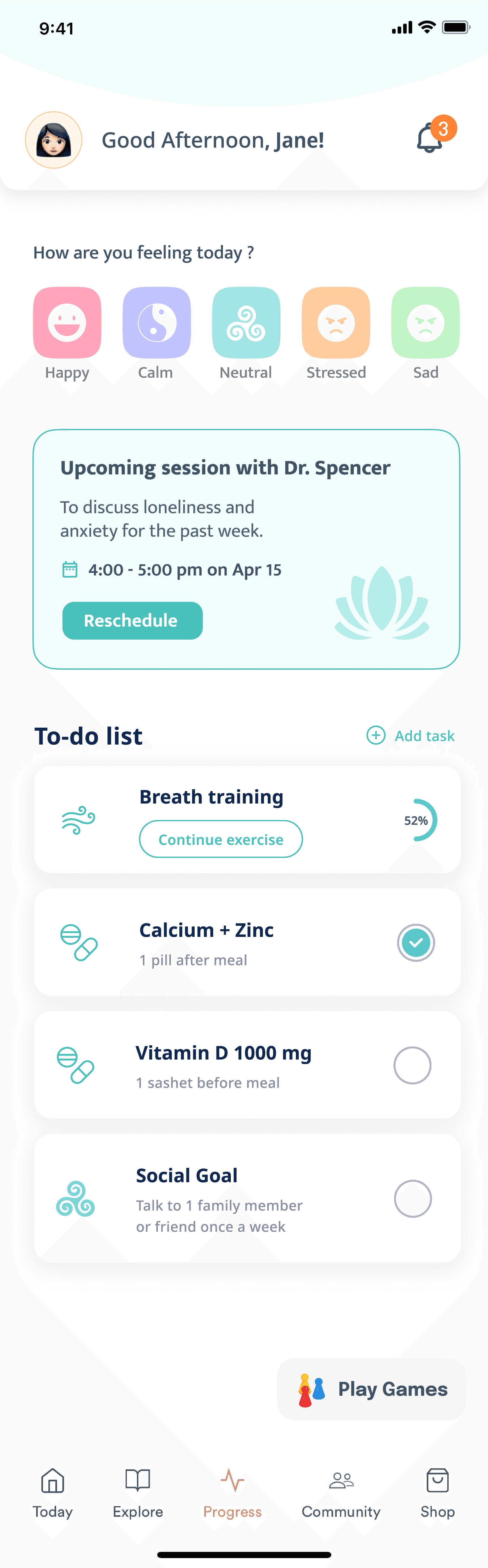
I replaced complex graphs with illustrations and expressive language by giving users a gentler, more intuitive way to track and interpret their mood.
Instead of formal community feed to connect,
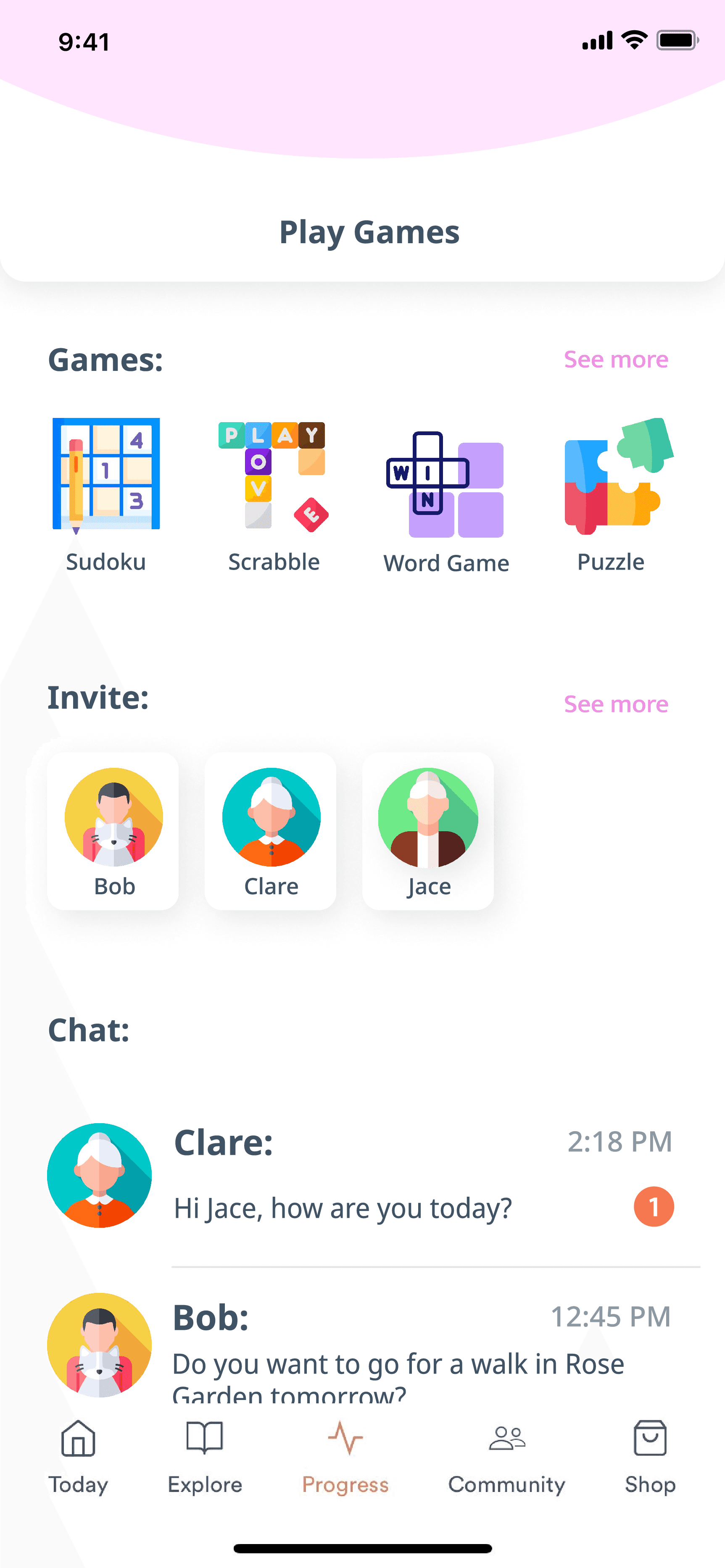
I designed a casual social space where older adults could connect through lighthearted chats and shared activities making connection feel natural, not forced.
05 final feature proposal
By considering the low digital literacy rate pattern in our users, I designed data visualizations that are intuitive, and qualitative.
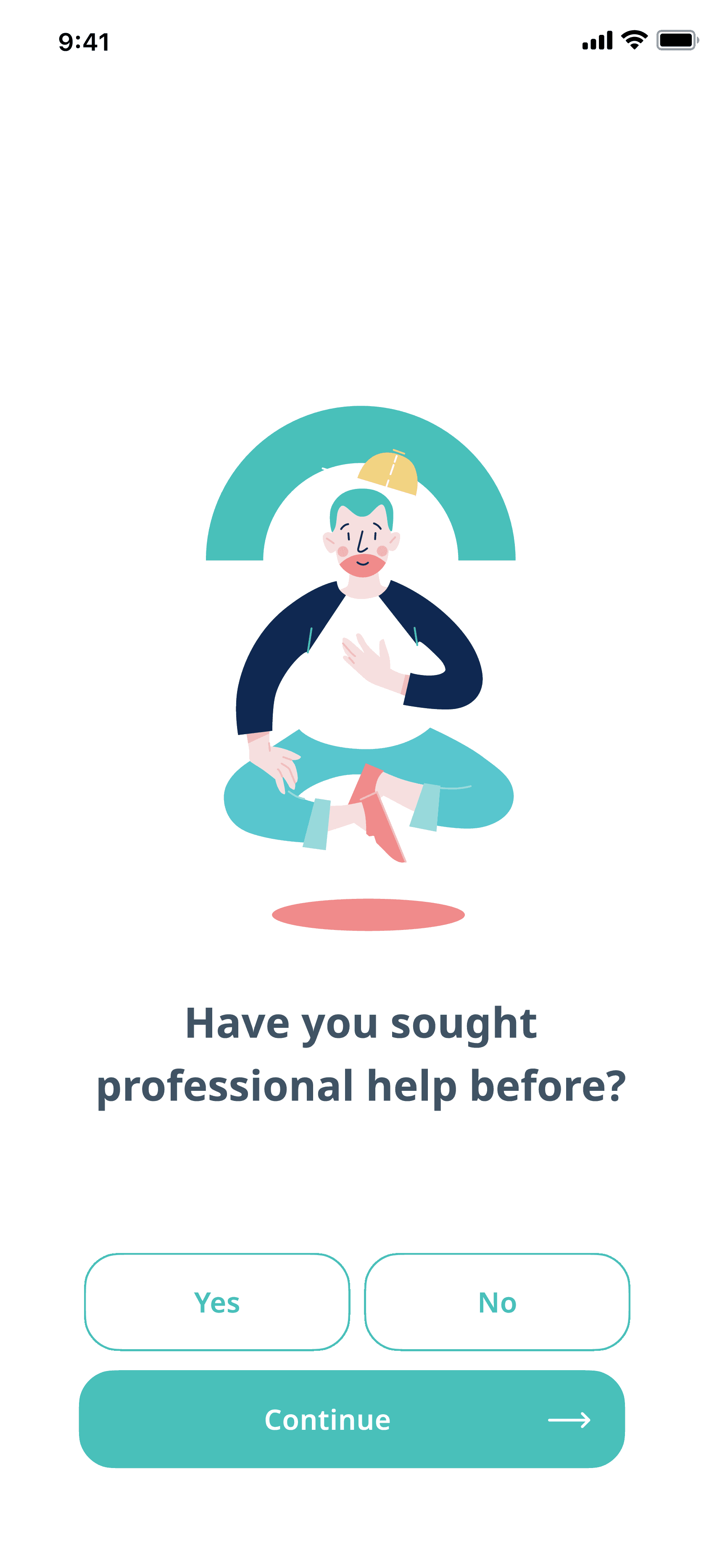
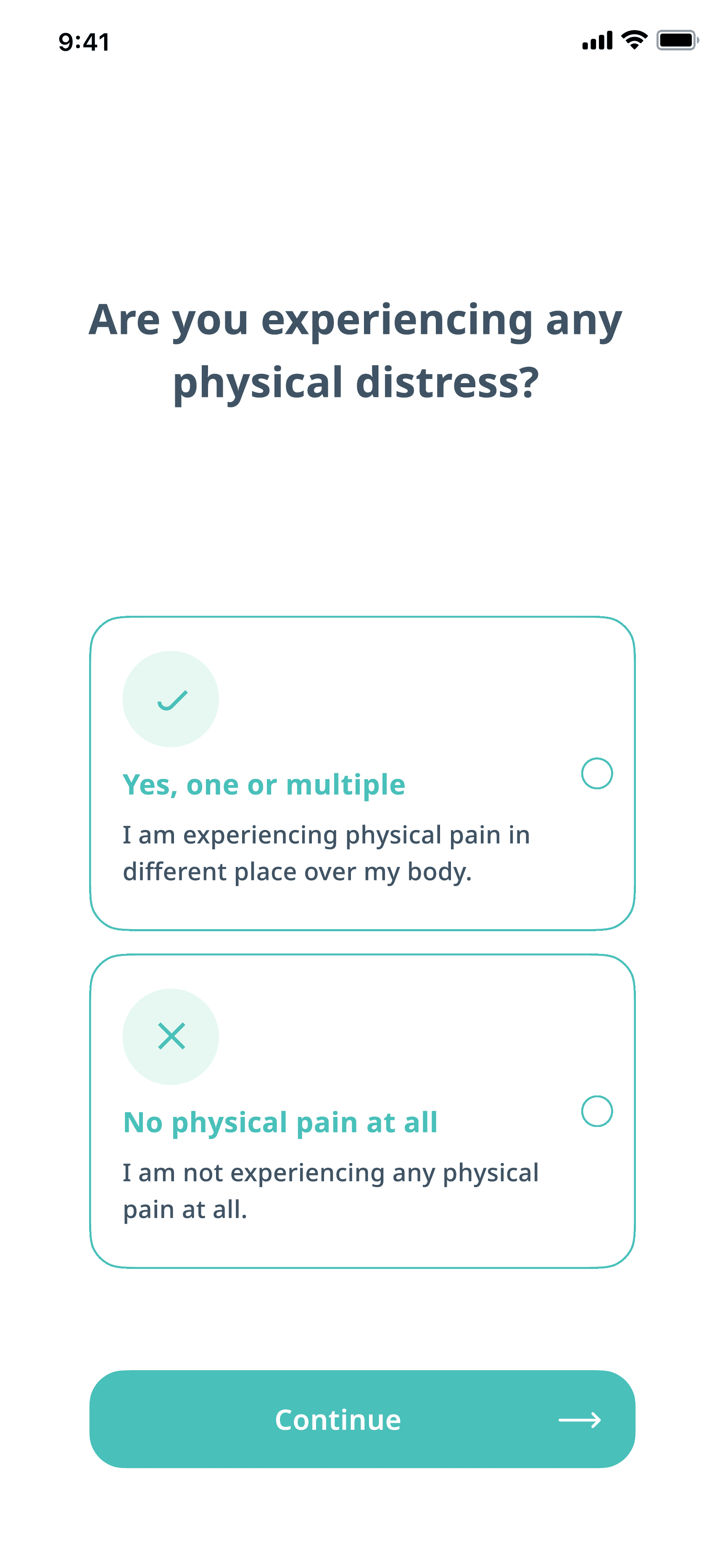
Mental Health Assessment during onboarding
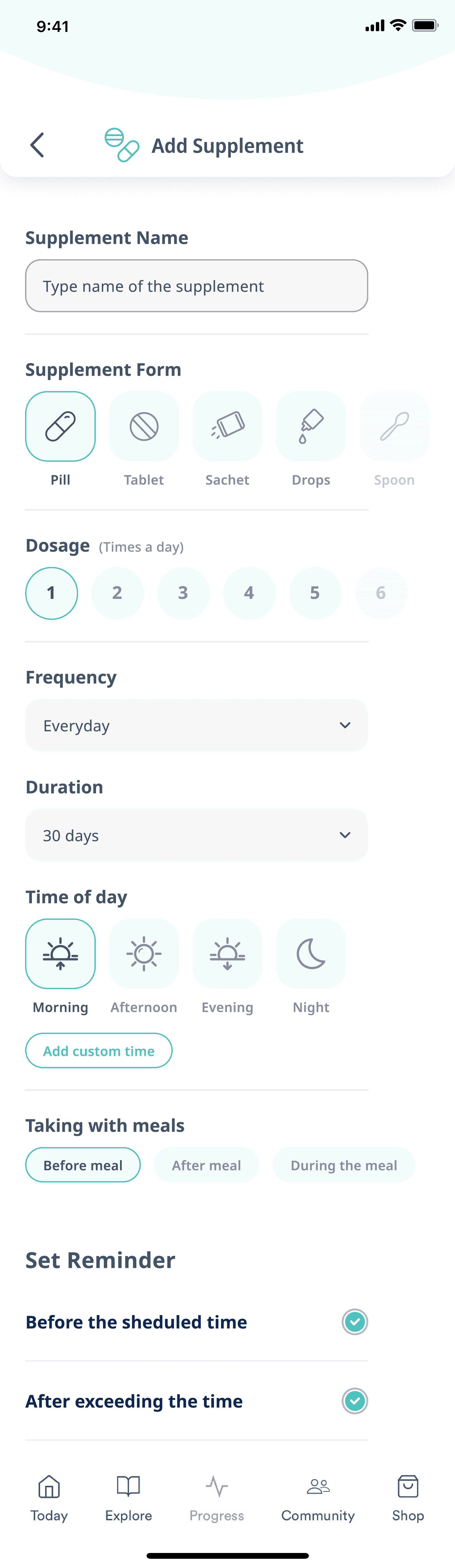
Mood Tracker and Supplement-Taking Reminder
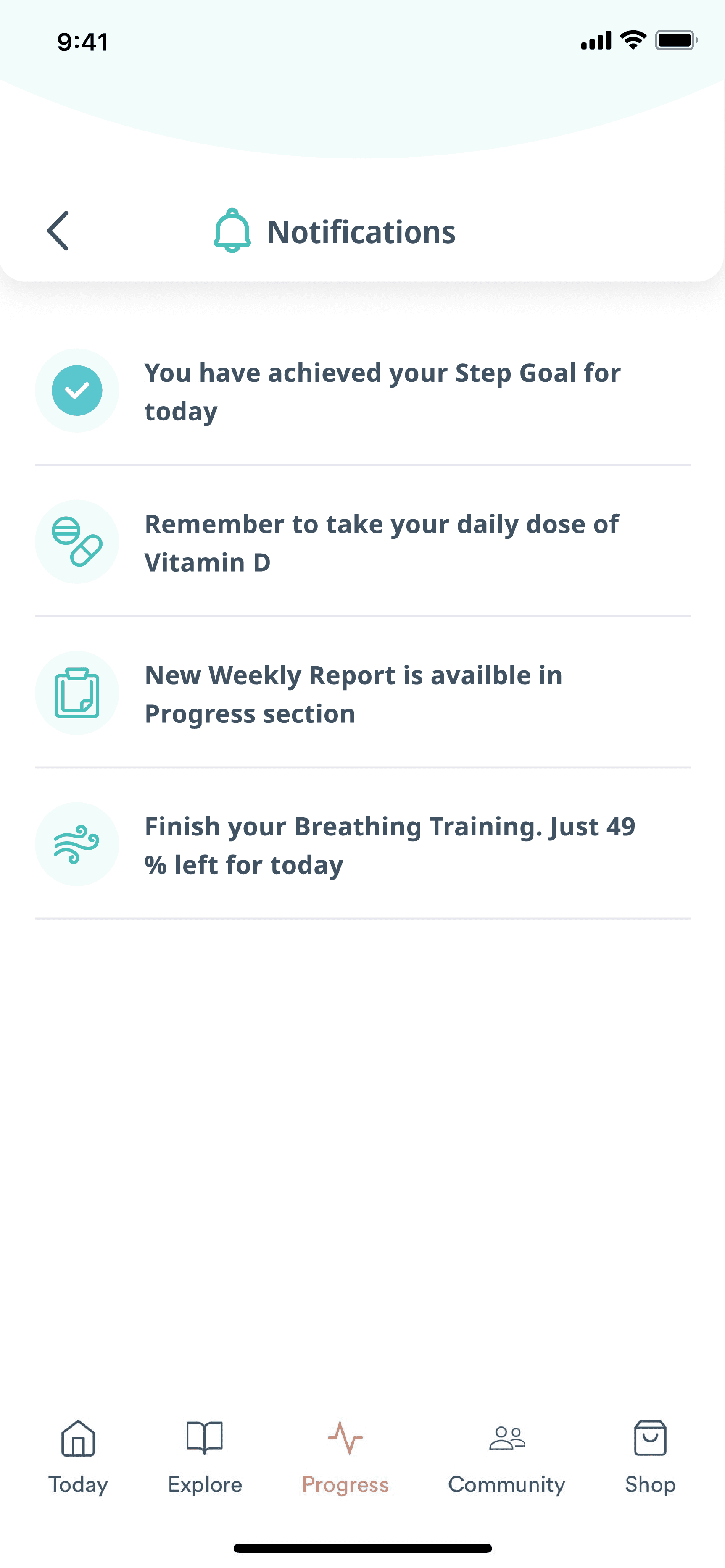
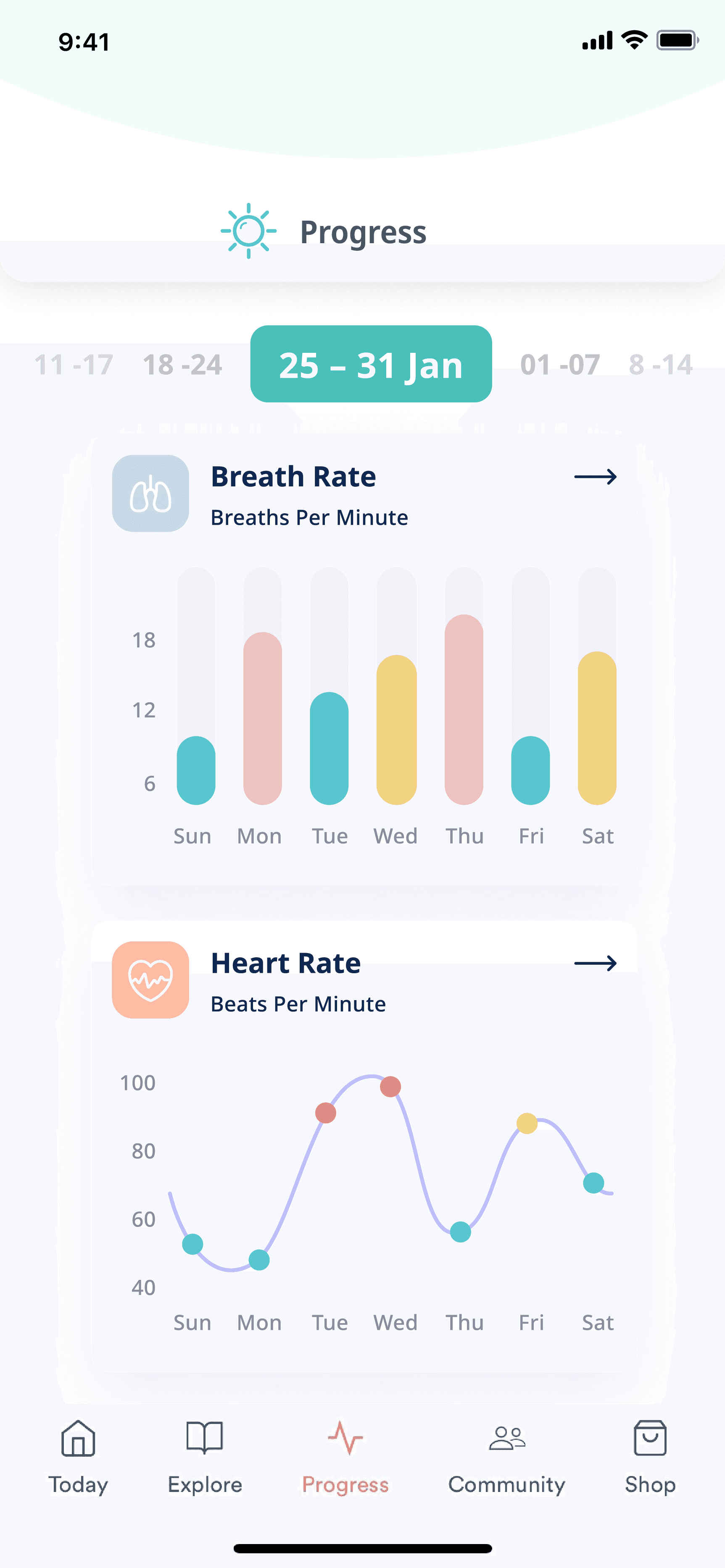
Wellness Exercise and Community Building
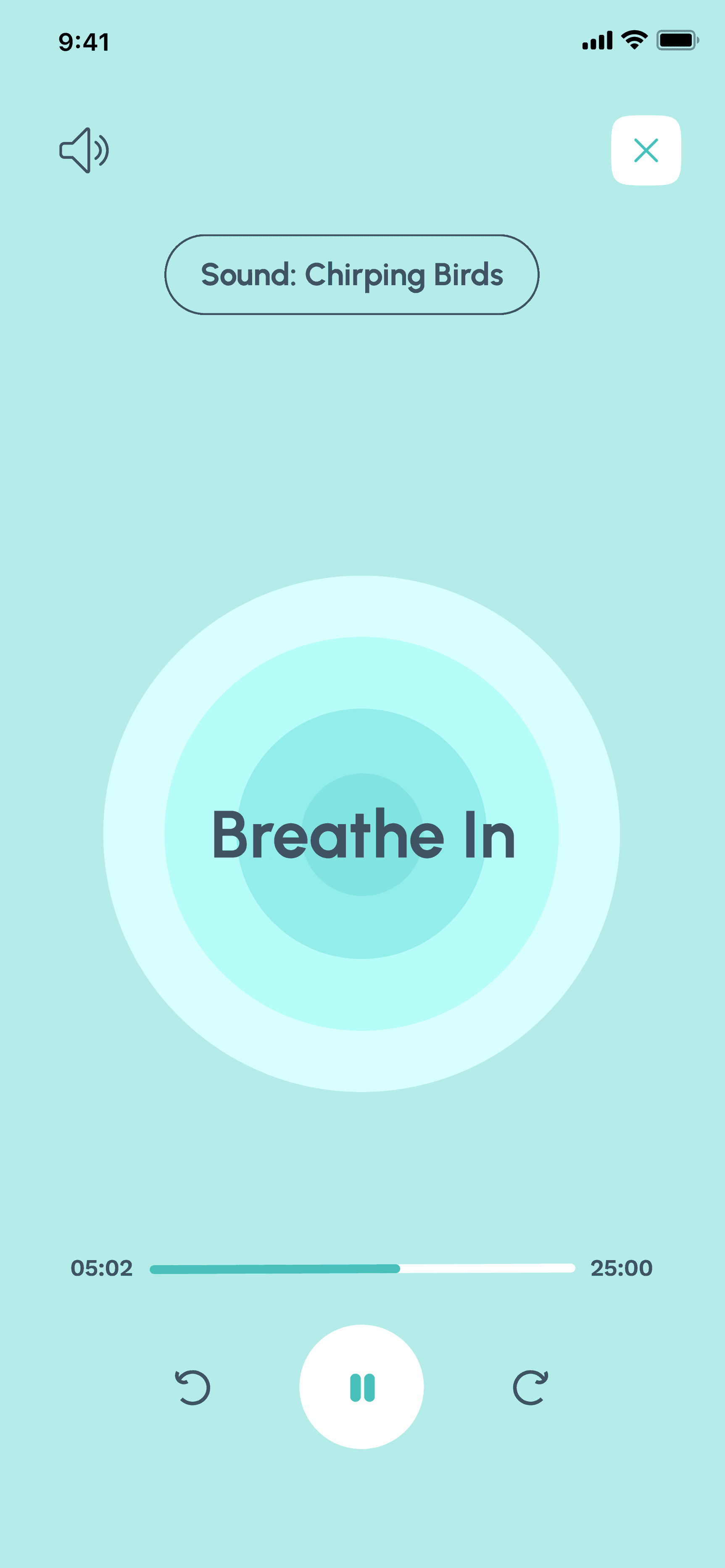
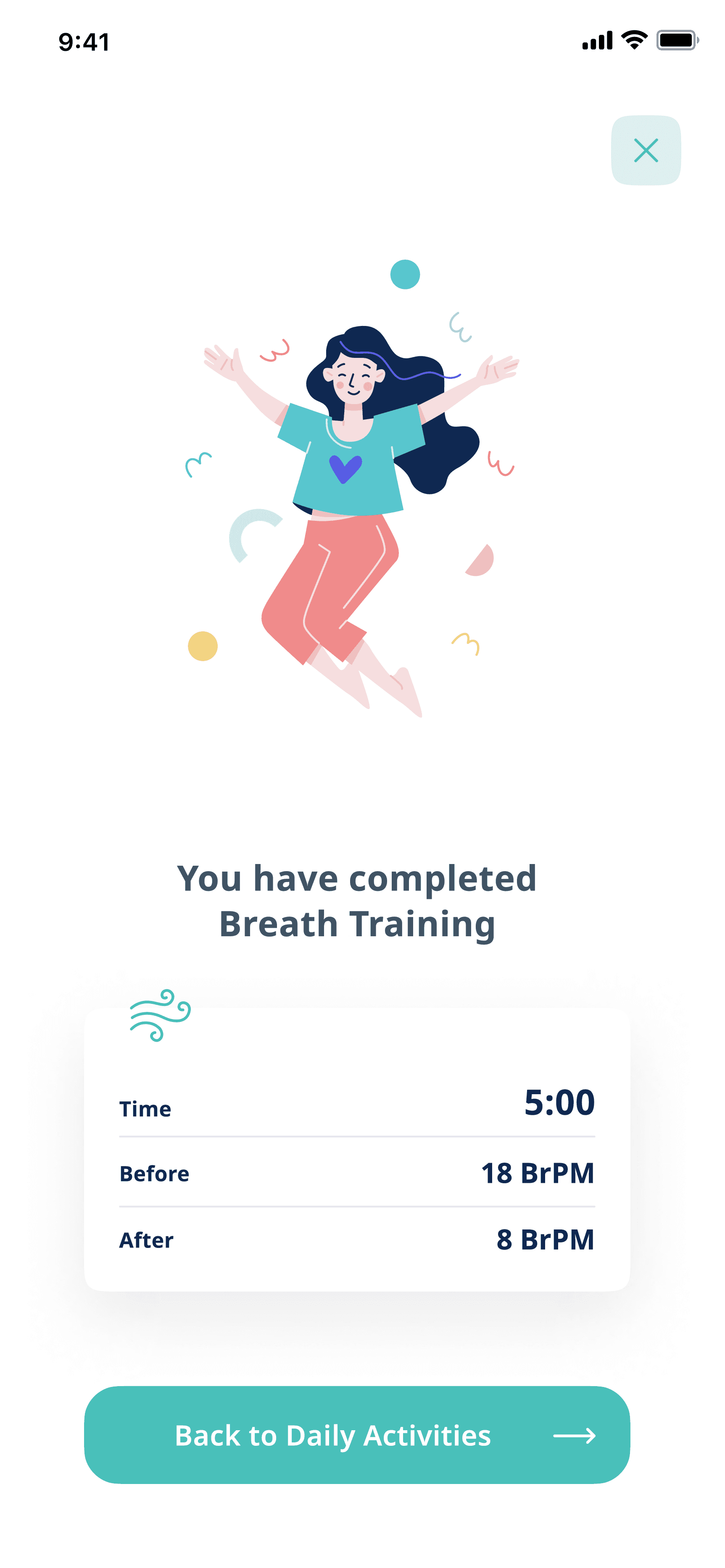
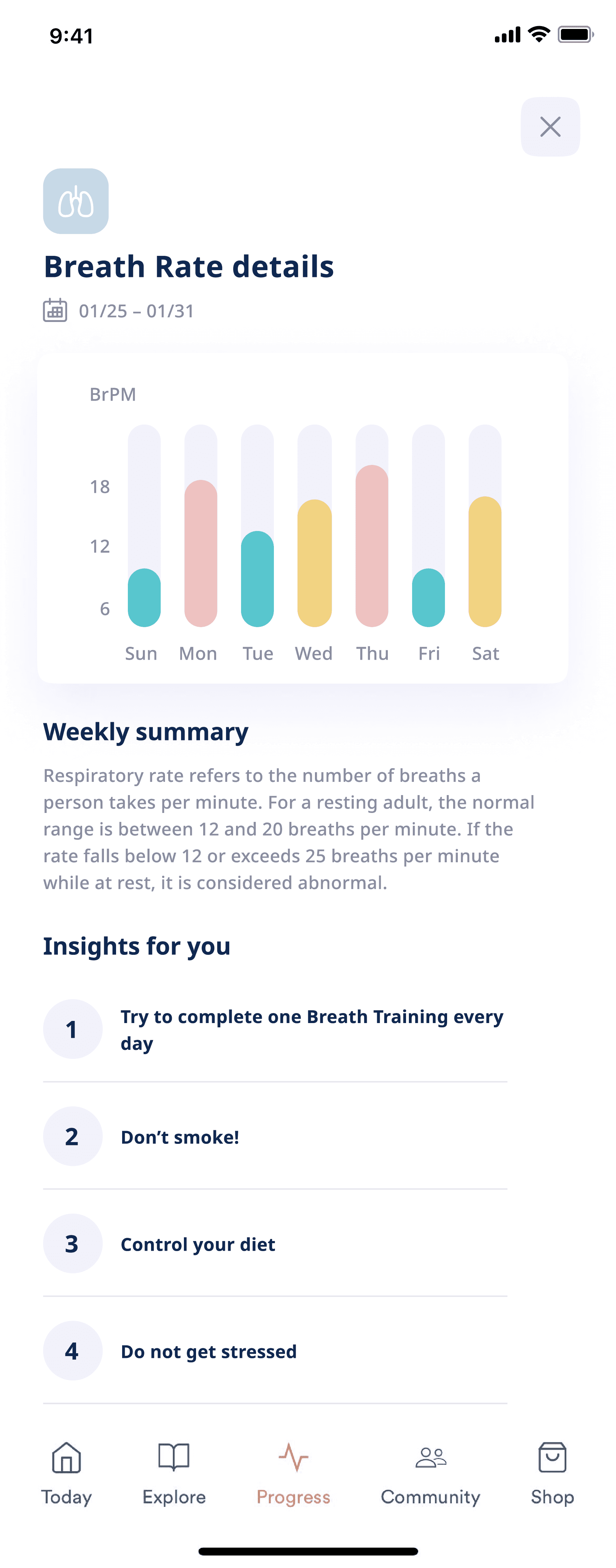
06 outcome & results
Over 8 months of iterative design and testing, the new mental well-being features drove an 8% increase in app usage and an 18% improvement in engagement and retention.
Working directly with the CEO and engineering team, we shipped a scalable design system with standardized components, supported by 15+ iterative prototypes across the full feature set, reducing design-to-development friction for future iterations.